As Trump's Momentum Weakens, Canada's Trade Pivot Toward Europe Is Gaining Strength

tendata blogTrade Trends News

ten data blog2026-02-28

The European Union is currently in discussions about joining the Comprehensive and Progressive Agreement for Trans-Pacific Partnership (CPTPP), a trade bloc that already includes Canada.

canada's trade


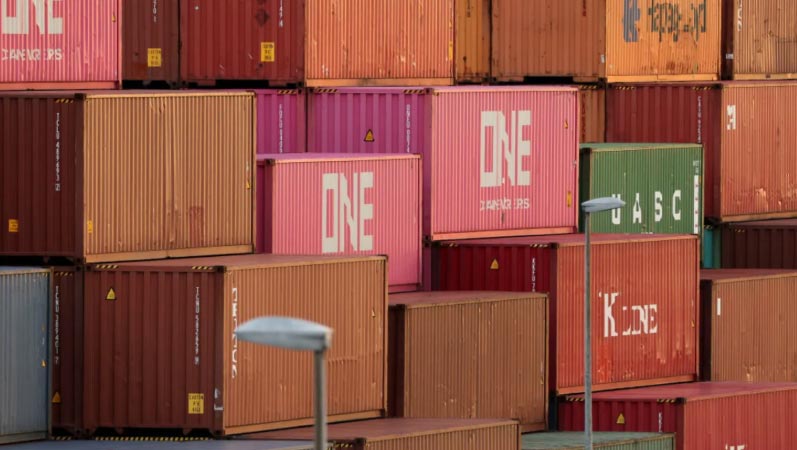
One of last year’s most underreported stories was the sharp surge in Canadian exports to the United Kingdom. The increase was so significant that the UK has become Canada’s second-largest export market, surpassing China.


In the first 11 months of 2025, Canadian exports to the UK reached $42.5 billion, compared with $31 billion to China. That represents an increase of nearly 60%, largely driven by a spike in gold exports (Canada is a major gold producer, while the UK is a global gold trading hub). At the same time, agricultural products, clean technology, and aerospace exports also recorded solid growth.


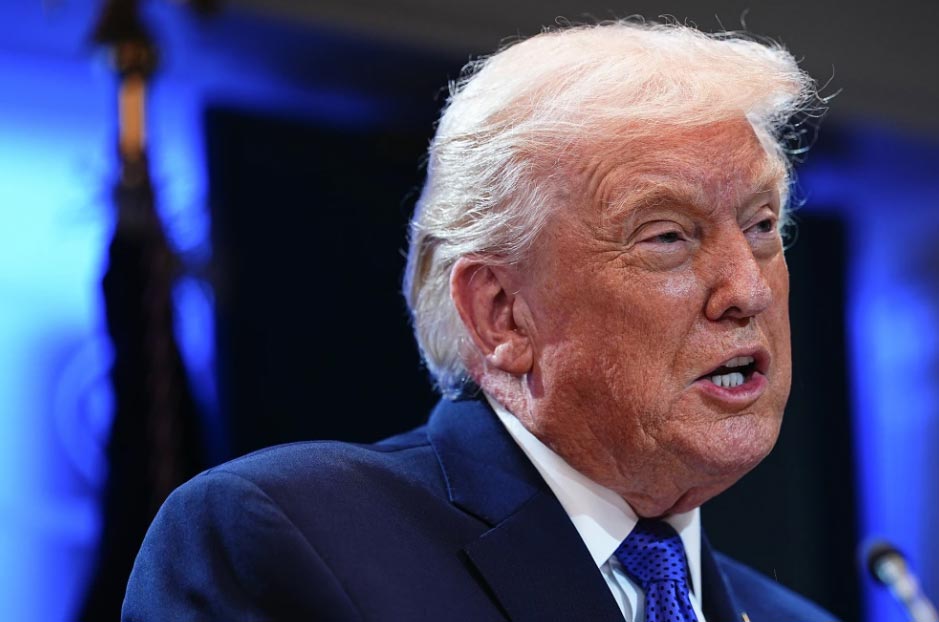
This shift is particularly noteworthy amid reports from Washington suggesting that President Donald Trump has privately considered withdrawing from the free trade agreement with Canada and Mexico, which is up for renewal this year.


Overall, the uncertainty created by Trump’s trade policies has led to a 5% decline in Canadian exports to the United States in the 11 months ending in November. However, growth in the UK, the EU, and the Asia-Pacific region has offset much of that loss. In November, the U.S. accounted for 68% of Canada’s exports — still high, but significantly lower than in previous years.


On Monday, Politico reported that the European Union and the 12-member CPTPP bloc — which includes Canada, the UK, Japan, Mexico, Vietnam, Malaysia, Australia, Peru, Chile, Brunei, Singapore, and New Zealand — have launched exploratory talks on forming a new trade partnership.


This aligns with what Canadian Prime Minister Mark Carney described at the World Economic Forum in Davos as middle powers working together — because “if you’re not at the table, you’re on the menu.” He specifically noted that Canada is actively working to build bridges between the CPTPP and the EU.


According to Politico, the idea has been welcomed in Tokyo, Berlin, and London. Skeptics point out that nearly a decade after Canada’s trade agreement with the EU came into force, 10 member states have yet to ratify it. Nevertheless, Canadian exports to the EU in 2024 were 57% higher than in 2015, suggesting such agreements do yield tangible results.


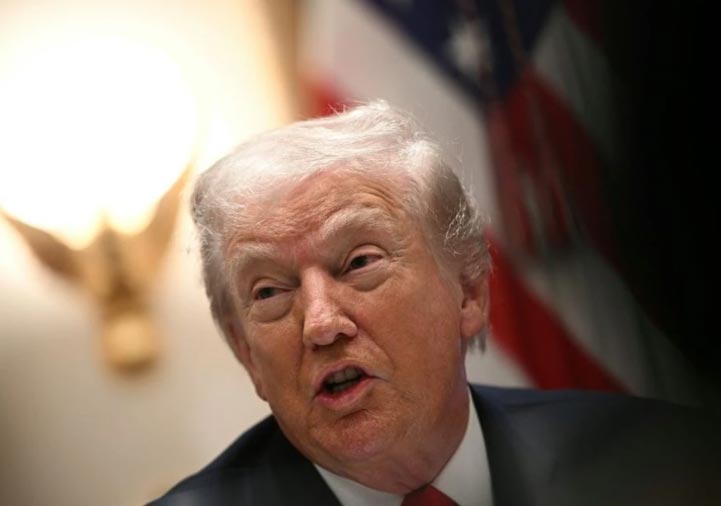
In recent weeks, there has been a growing perception that the political winds are shifting against Trump. He increasingly appears to be more bluster than substance, lacking either the preparation or the capacity to follow through on many of his threats.


Trump may warn of withdrawing from the U.S.–Canada–Mexico Agreement (USMCA), but Canada’s newly appointed chief trade negotiator, Janice Charette, is a seasoned political veteran who understands that brinkmanship is often a tactic to gain leverage.


Business groups and members of Congress would likely resist such a move. Last week, the House of Representatives voted against punitive measures targeting Canada, with six Republicans joining Democrats in support. Although the vote fell short of the two-thirds majority required to override a presidential veto, a withdrawal vote on the USMCA might reach that threshold.


Moreover, ahead of the midterm elections, Trump is already under heavy pressure over the rising cost of living.


The Congressional Budget Office recently reported that 95% of the cost of Trump’s tariff policies has been borne by American consumers and businesses. The effective tariff rate is now 13 percentage points higher than in 2024.


The report concluded that these policies, along with retaliatory actions by major trading partners, would temporarily increase inflation, reduce real investment, lower GDP levels, and decrease employment compared to a scenario without changes in trade policy.


Meanwhile, the Yale Budget Lab estimates that tariffs cost the average American household approximately $1,400.


Trump has previously threatened to raise tariffs to 100% if Canada signs a trade agreement with China, to increase tariffs on Canadian aircraft if Canada does not approve Gulfstream jets, and to refuse to open the Gordie Howe International Bridge.


A year ago, such threats might have rattled members of Parliament. Today, they are often met with skepticism. Few believe Trump will actually withdraw from the USMCA.


There will undoubtedly be tough negotiations. U.S. Trade Representative Jamieson Greer is seeking higher regional content requirements to boost domestic auto production, improved market access for American agricultural products — particularly dairy — stronger protections for the U.S. tech sector, and agreements to secure critical minerals.


At least this resembles a negotiation rather than a shakedown.


Last week, the far-right outlet Breitbart News interviewed Conservative MP Jamil Jivani, who traveled to Washington to meet his longtime friend, Vice President JD Vance.


Jivani told Breitbart that “anti-American sentiment” among Canadian officials was harming national interests. He acknowledged that “Canada’s economy is struggling,” citing the loss of 52,000 private-sector jobs in January. He called for dialogue between the two countries so that expanding auto-sector employment in Canada would not be seen as an opportunity cost, but rather as a way to support manufacturing growth in both nations.


However, the broader obstacle to this perspective may not be hysteria among Canadian officials.


Canada has seen more prosperous times, and some of its recent difficulties stem from the disruption caused by Trump’s trade policies. Yet the country remains resilient.


Jivani did not mention that full-time employment in Canada increased by 149,000 last month compared to a year earlier.


As Carney put it, Trump has attempted to weaponize economic integration as a tool of coercion.


But as Canada diversifies its trade relationships and reduces its exposure to retaliation, the strategic balance appears to be shifting away from the president.

Leave Message for Demo Request or Questions

We always appreciate your visit at tendata.com. We'd love to hear your suggestions, feedback & queries. Please contact us to schedule a demo or learn more about our services. We will respond to your query within 1 working day.

More Popular Blogs

These related articles may also be of interest to you

Geting Price

Global Trade Data Leader
Get Pricing
Free Demo
X

'Target Customer
'Acquisition & Intelligent
'Decision-Making

'Global Trade Marketing Intelligent'
Decision-Making SaaS Platform

Welcome Tendata iTrader

Please fill in the infos to get free demo

  • *

  • *

  • *

  • *

  • *

  • *

  • *
  • *

Success!

A rep will contact you within 10 minutes to get your demo.If you need a faster answers around features, pricing, etcplease scan to add Whatsapp online customer service.

Scan the QR code or click here for immediate consultation.
close
Privacy and Data Protection Policy
Effective Date: 01/07/2026

1. Introduction

Tendata (Shanghai Tendata Tech Co., Ltd., hereinafter referred to as “Tendata”, “we”, “us”, or “our”) is committed to protecting your privacy and data security. This Privacy and Data Protection Policy (“Policy”) explains how we collect, use, store, share, and protect your information when you visit our websites, use our customs data query systems, software-as-a-service (SaaS) platforms, or otherwise engage with our services.

2. Scope

This Policy applies to:
Tendata’s official website and related mobile applications;
Tendata’s customs data analytics software and SaaS offerings;
Communications via phone, email, or offline meetings.
Special Note: The “customs data” referred to in this Policy primarily involves commercial business information in international trade (e.g., importer/exporter names, transaction values, quantities, product descriptions). Tendata does not actively collect sensitive personal information of natural persons (such as biometric or health data), unless you voluntarily provide such information as our client representative.

3. Categories of Information We Collect

We collect information in three main categories:
3.1 Information You Voluntarily Provide
Account Information: name, job title, company name, corporate email address, phone number, and office address.
Communication Content: inquiries, feedback, and attachments submitted through online forms, customer service chats, or email subscriptions.
3.2 Information Generated During Service Use
Search and Query Records: keywords, HS codes, product descriptions, and browsing history entered into our system.
Log Data: IP address, browser type, operating system, access times, and page clickstreams.
Transaction and Contract Information: details of purchased service packages, payment records, and invoice information.
3.3 Information from Third-Party Sources
We may verify your corporate background information from publicly available commercial channels to ensure compliance with our service terms.

4. How We Use Your Information

We use your information for the following legitimate purposes:
Service Provision and Support: account activation, generation of data analytics reports, processing refunds, and handling technical support requests.
Product Improvement: analysing user behaviour patterns to optimise our data algorithms and user interface.
Marketing and Notifications: sending industry insight reports, product updates, or event invitations, subject to your prior consent.
Legal Compliance and Security: detecting and preventing fraud, maintaining system security, and fulfilling anti-money laundering and export control compliance obligations.

5. Data Storage and Protection

5.1 Storage Location
Your personal and business data are primarily stored on servers located in Shanghai, China, and on Alibaba Cloud’s secure infrastructure. We strictly comply with applicable data localisation requirements.
5.2 Security Measures
Tendata employs industry-leading security measures to protect your data:
Transport Layer Security: full-site TLS 1.3 encryption to ensure secure data transmission.
Storage Encryption: sensitive fields are encrypted using AES-256 encryption.
Access Control: a strict internal permission hierarchy, granting access only to authorised personnel on a “minimum necessary” basis.
Backup and Disaster Recovery: automated daily backups to ensure high data availability.

6. Sharing, Transfer, and Disclosure of Your Information

6.1 Sharing with Third-Party Partners
We only share your data when necessary:
Service Providers: such as cloud service providers (Alibaba Cloud), email delivery services, and payment gateways. These partners are bound by strict data processing agreements.
Legal Requirements: disclosure in response to mandatory requests by Chinese laws, administrative regulations, or judicial authorities.
6.2 Business Transfers
If Tendata is involved in a merger, acquisition, or asset restructuring, your data will be transferred as part of the business assets. We will notify you in advance and require the new entity to continue to comply with this Policy.
6.3 Prohibition on Sale
Tendata explicitly undertakes that we will never sell, trade, or rent your personal data or business secrets to any unrelated third party.

7. Your Data Subject Rights

Under the Personal Information Protection Law (PIPL) and the GDPR, you have the following rights:
Right to be Informed and Right of Access: you may contact us at any time to confirm whether we are processing your personal data and request a copy of that data.
Right to Rectification: you may request correction of inaccurate or incomplete data.
Right to Erasure (“Right to be Forgotten”): under certain circumstances (e.g., when the purpose of processing has been fulfilled or you withdraw consent), you may request deletion of your personal data.
Right to Withdraw Consent: you may withdraw your consent for marketing communications at any time.
Right to Data Portability: you have the right to request that the structured data you provided be transferred to another controller.
How to Exercise Your Rights: Please send an email to [email protected]. We will respond within 15 business days.

8. Cookies and Similar Technologies

We use strictly necessary cookies to maintain login sessions and improve page loading speed. You may disable cookies in your browser settings, but this may affect the functionality of certain features. We do not use cookies to track your cross-site behaviour for profiling.

9. Protection of Minors

Our services are designed for businesses and professionals and are not intended for individuals under the age of 14. If we discover that we have inadvertently collected information from a child, we will delete it promptly.

10.Customs Data Compliance Statement

The customs and trade data provided through Tendata’s services are obtained from lawful and commercially available sources. Such information is intended solely for legitimate business purposes and should not be used for unlawful, discriminatory, or prohibited activities.

11. Policy Updates

We reserve the right to update this Policy from time to time. For material changes (e.g., changes in the purposes of data processing), we will notify you prominently via in-app messages or email.

12. Contact Us

If you have any questions, complaints, or suggestions regarding this Policy or data security, please contact our Data Protection Officer:
Shanghai Tendata Tech Co., Ltd.
Address: 8F, South Tower, Building 9, Lujiazui Software Park, No. 20, Lane 91, Eshan Road, Pudong New Area, Shanghai
Data Protection Email: [email protected]
Phone: +021-60898388-8111
close

We Value Your Privacy

We use cookies and similar technologies to improve your browsing experience, analyze website traffic, personalize content, and provide better services. Some cookies are essential for the operation of our website, while others help us understand how visitors interact with our platform.
By clicking "Accept All", you consent to the use of cookies as described in our Cookie Policy. You can manage your cookie preferences at any time.Privacy Policy

Free Demo
Demo