 Exhibition
 B2B Platforms
 Standalone Website
 Social Media
 Emails
Why Import Export Data Is the Key to Smarter Global Trade Decisions - Tendata
 Trade Data Provider
 2026-07-29
International trade is becoming more competitive every year. Buyers have more supplier options, supply chains are constantly evolving, and new markets are emerging faster than ever. In this environment, successful businesses don't simply react to changes—they anticipate them. That's where import export data comes in.
By analyzing real import and export activities, companies can understand where demand is growing, which products are gaining momentum, and how competitors are performing in different markets. Instead of relying on assumptions or outdated reports, import export data enables businesses to make decisions based on verified trade transactions.
Whether you're searching for new customers, evaluating overseas markets, or refining your export strategy, import export data provides the insights needed to move forward with confidence.

What Is Import Export Data?
Import export data consists of customs records generated whenever goods cross international borders. Customs authorities collect these records to supervise international trade, calculate duties, and compile official trade statistics.
Depending on the country and data source, import export data may include product descriptions, HS codes, shipment quantities, customs values, countries of origin and destination, ports, transportation methods, and declaration dates.
Professional trade intelligence platforms further organize import export data by importer, exporter, supplier, product, and industry, making it much easier to analyze business opportunities.
Because it reflects actual international transactions, import export data has become one of the most trusted sources for global market research.
10 Free Resources for Import Export Data Research
Businesses can begin exploring international markets through free government and trade organization resources. While these platforms mainly provide macro-level statistics rather than detailed company shipment records, they are excellent starting points for understanding global trade.
1. Euro-Mediterranean Trade Helpdesk
Website: https://trade.ec.europa.eu/access-to-markets/
Provides trade requirements, tariffs, import procedures, and market access information for businesses trading with the European Union.
2. ASEAN Customs Transit System
Website: https://acts.asean.org/
Offers customs transit information and regional trade facilitation resources across ASEAN member countries.
3. Access2Markets
Website: https://trade.ec.europa.eu/access-to-markets/
The European Commission's platform provides tariff information, customs procedures, rules of origin, and import/export requirements.
4. Export Potential Map
Website: https://exportpotential.intracen.org/
Developed by the International Trade Centre, this tool helps businesses identify products and markets with strong export potential.
5. GlobalEDGE
Website: https://globaledge.msu.edu/
Operated by Michigan State University, GlobalEDGE provides country profiles, trade statistics, logistics information, and market research resources.
6. UNCTADstat
Website: https://unctadstat.unctad.org/
UNCTAD publishes comprehensive international trade, investment, and economic development statistics.
7. OECD Data Explorer
Website: https://data-explorer.oecd.org/
Provides international economic indicators, trade statistics, and country comparisons.
8. WTO Trade Profiles
Website: https://www.wto.org/
The WTO publishes annual trade profiles for member economies, including merchandise trade performance and market indicators.
9. ITU ICT Trade Statistics
Website: https://www.itu.int/
The International Telecommunication Union provides trade-related statistics for ICT products and digital industries.
10. World Bank Open Data
Website: https://data.worldbank.org/
Offers international trade indicators, logistics performance data, and global economic statistics for market analysis.
Why Import Export Data Is More Than Just Trade Statistics
Many businesses view import export data simply as a collection of customs records.
In reality, it provides valuable business intelligence.
For example, comparing several years of import export data allows companies to identify markets where demand is consistently increasing, products that continue gaining popularity, and regions experiencing supply chain changes.
These insights help businesses allocate marketing budgets more effectively, prioritize expansion plans, and reduce the risks associated with entering unfamiliar markets.
Instead of asking where they should sell next, businesses can use import export data to understand where customers are already buying.
Why Free Trade Databases Can't Support Customer Acquisition
Official trade databases are highly reliable, but they are primarily designed for public statistics and policy research.
Imagine you're exporting industrial pumps. A government database might show that imports of these products increased by 20% in a particular country last year. While this confirms growing demand, it doesn't tell you:
· Which companies purchased those products.
· Whether they import regularly or only occasionally.
· Who their existing suppliers are.
· Which buyers are currently expanding procurement.
Without these commercial insights, sales teams still need to spend significant time researching prospects manually.
Professional trade intelligence platforms solve this problem by connecting customs records with company-level business intelligence.
How Tendata Helps Businesses Unlock the Full Value of Import Export Data
Tendata is a comprehensive global trade intelligence platform that transforms import export data into actionable business opportunities.
By integrating customs records, AI-powered analysis, buyer discovery, competitor monitoring, and market intelligence, Tendata enables businesses to make faster and more informed international trade decisions.
Identify Markets With Strong Import Demand
Not every growing economy represents a strong opportunity for every product.
Using Tendata, businesses can analyze import export data by HS code, product category, country, and industry to identify markets where demand matches their offerings.
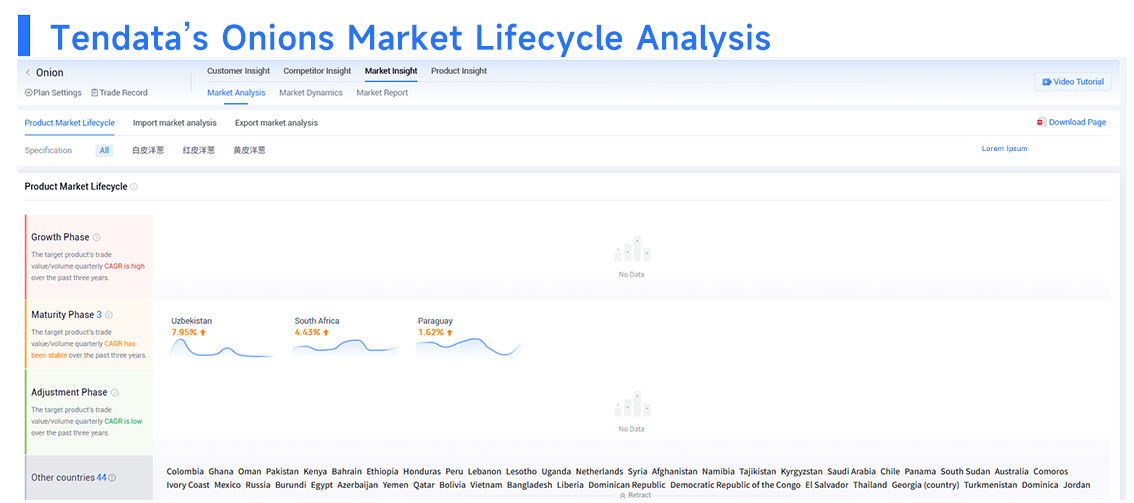
For example, an exporter of onions can search HS Code 070310 to compare import trends across countries, identify stable purchasing markets, and evaluate long-term growth opportunities before investing in market development.
>>> Tendata’s Onions Market Lifecycle Analysis <<<
Data Source: Tendata Platform
Track Competitor Performance Across Global Markets
Understanding competitor strategies is an important part of international expansion.
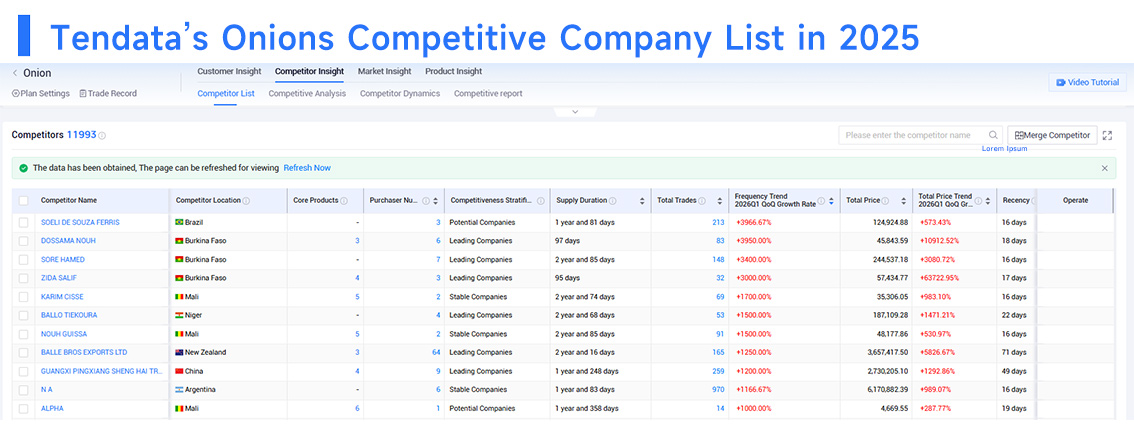
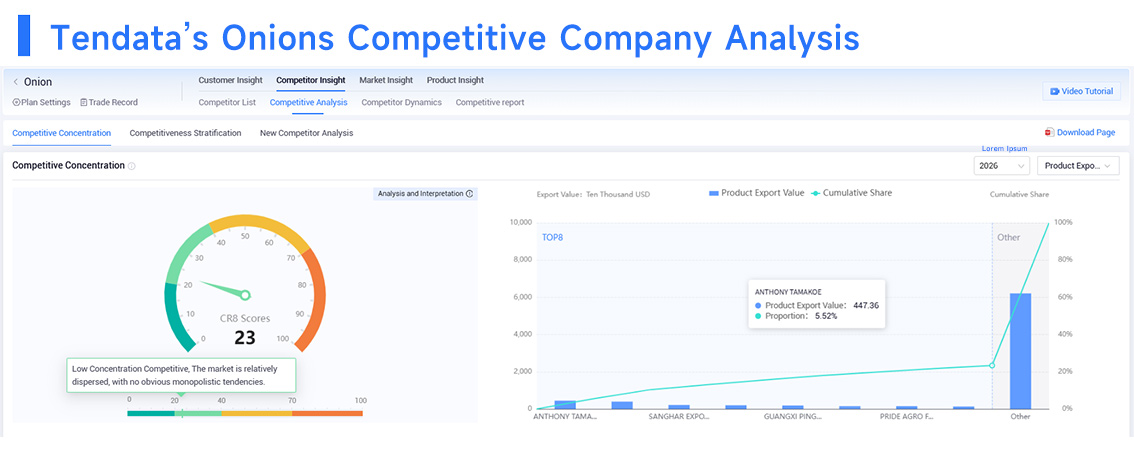
Tendata enables users to analyze competitors' shipment destinations, transaction frequency, exported products, and historical trade activity using verified import export data.
These insights help businesses benchmark performance, identify underserved regions, and refine their own market strategies.
>>> Tendata’s Onions Competitive Company List in 2025 <<<
Data Source: Tendata Platform
>>> Tendata’s Onions Competitive Company Analysis <<<
Data Source: Tendata Platform
Find Buyers With Verified Purchasing Activity
One of the biggest advantages of professional import export data is the ability to identify companies that are actively involved in international trade.
Tendata allows businesses to review buyer purchasing history, supplier relationships, procurement cycles, and transaction frequency before beginning outreach.
>>> Get a Free Demo from Tendata <<<
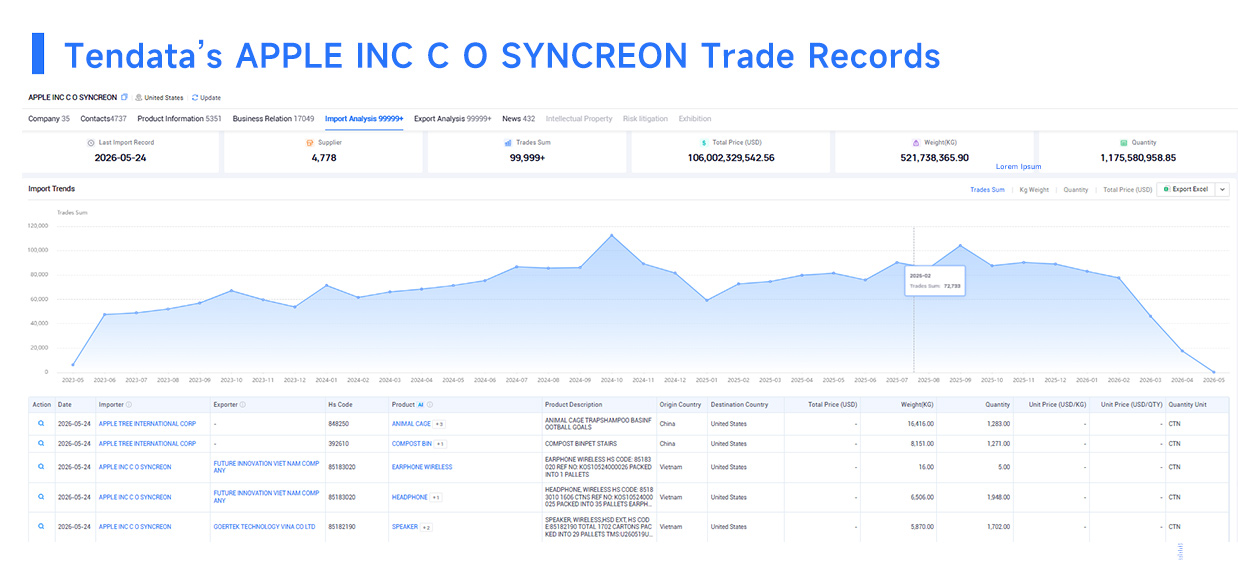
Data Source: Tendata Platform
The platform also integrates available business contact information, including company email addresses, LinkedIn profiles, Facebook pages, and other publicly available business resources, helping sales teams connect with qualified decision-makers more efficiently.
>>> Obtaining Customer Contact Information from Tendata <<<
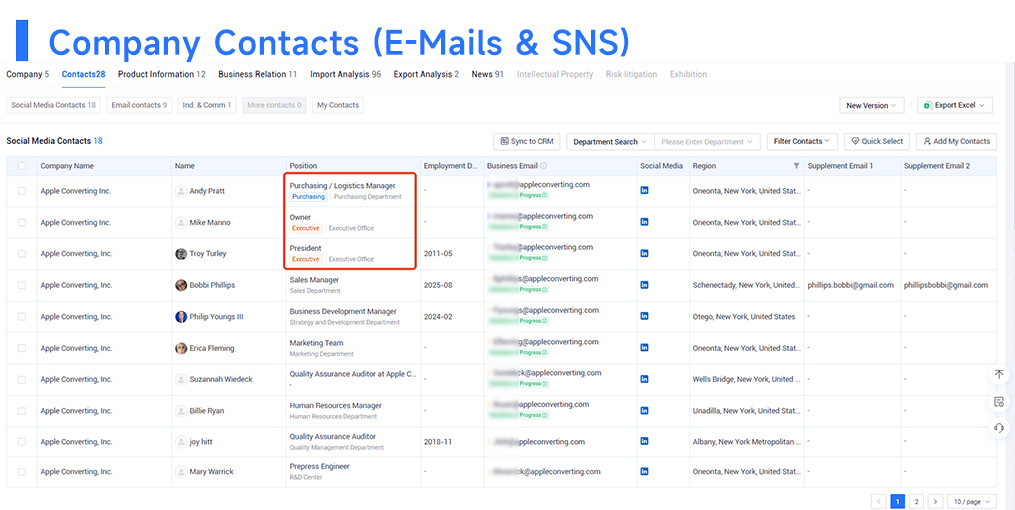
Data Source: Tendata Platform
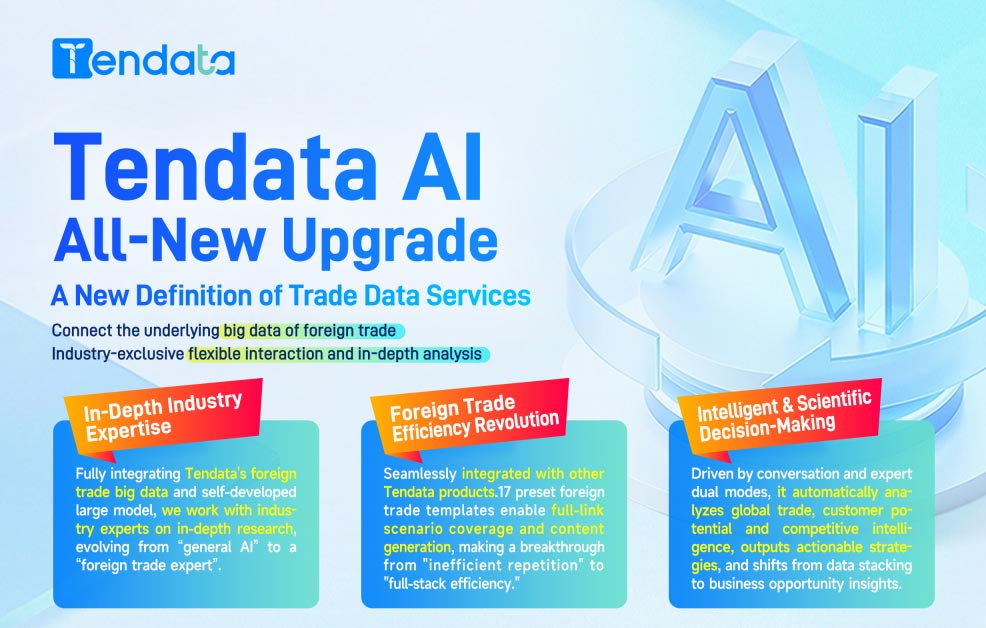
Accelerate Customer Development With Tendata AI
Powered by Tendata's global trade database and industry-specific AI, Tendata AI goes beyond basic data searches. It helps businesses analyze markets, evaluate competitors, identify high-potential buyers, and generate practical business insights through intelligent trade workflows.
By combining deep industry expertise with AI-powered analysis, companies can shorten research time, improve sales efficiency, and make smarter decisions with confidence.
>>> Get a Free Demo from Tendata <<<
Summary
Import export data enables businesses to make smarter international trade decisions by providing reliable insights into market demand, buyer activity, competitor performance, and global trade trends. Free resources such as Access2Markets, Export Potential Map, GlobalEDGE, UNCTADstat, WTO Trade Profiles, and World Bank Open Data are valuable starting points for market research and trade analysis.
For companies seeking deeper commercial intelligence, Tendata combines comprehensive import export data with AI-powered analysis, competitor monitoring, buyer discovery, and verified business contact information. By turning customs records into practical sales intelligence, Tendata helps businesses identify real opportunities, connect with qualified buyers, and achieve sustainable growth in international markets.
Category
Leave Message for Demo Request or Questions