 Exhibition
 B2B Platforms
 Standalone Website
 Social Media
 Emails
Trade Data Website: How to Find the Right Buyers and Reach the Right Decision-Makers
 Trade Data Provider
 2026-09-30
“I’ve sent more than 1,000 cold emails and still haven’t received a single reply.”
This is one of the most common complaints I hear from international trade professionals.
The first reaction is usually:
“Maybe customers don't need my product.”
But in many cases, that's not the real problem.
Your email may never have reached the right person.
Or it reached their inbox but looked so generic that it went straight to the trash.
After years of working in international trade, I've made plenty of mistakes with customer development myself. Here are two of the most common—and most damaging—problems behind poor cold email results.
1. You Reached the Right Company, But the Wrong Person
This is one of the easiest mistakes to make and one of the hardest to notice.
Many salespeople build prospect lists from trade show directories, business directories, search engines, or other online sources.
They find a company and an email address and think:
“Let's just send it.”
The problem is that the email may go to:
· A receptionist
· An HR employee
· An IT employee
· A general company inbox
Someone who has nothing to do with purchasing
These people may have no reason to respond to a supplier's sales email.
So you can actually get the company right while getting the contact wrong.
Before sending a cold email, you should be able to answer three questions:Is This the Right Company?
Does the company actually purchase or distribute products similar to yours?
A company website may say it operates in your industry, but that doesn't necessarily mean it currently buys your product.
This is where trade intelligence can provide additional context. Instead of relying only on a company website, you can use a trade data website or trade data platform to investigate whether the company has relevant import activity.
Who Is the Decision-Maker?
Depending on the business, the relevant person could be:
· Purchasing Manager
· Procurement Director
· Sourcing Manager
· Supply Chain Manager
· Technical Director
· Product Manager
· Owner or CEO
The right contact depends on the company's structure and your product.
How Can You Reach Them?
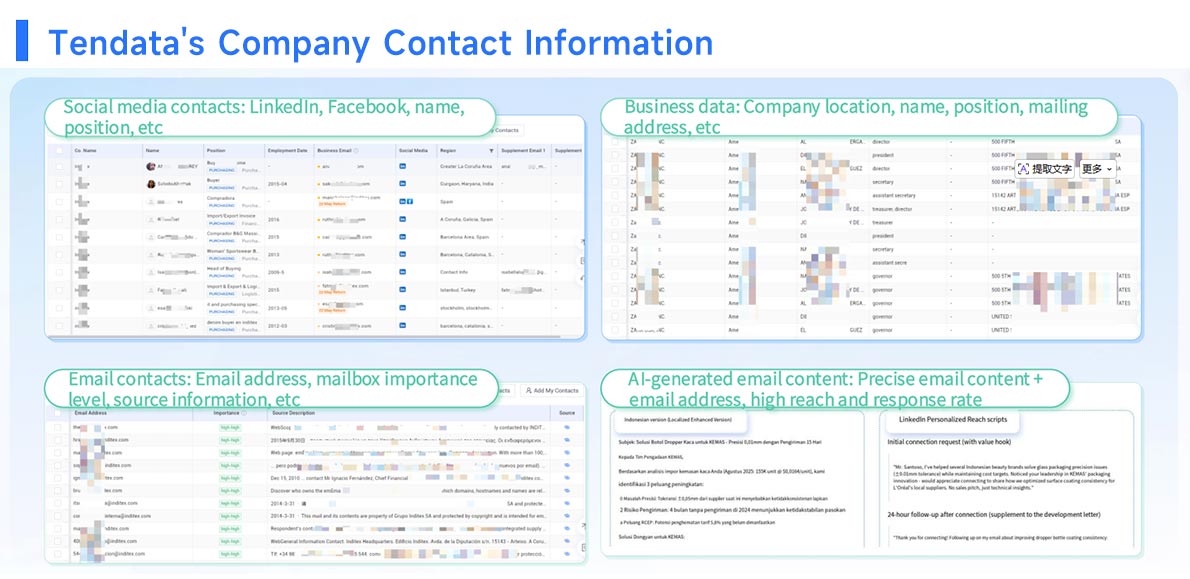
A generic company email is often less useful than a verified business contact belonging to the person responsible for purchasing or sourcing.
The problem is that finding all of this information manually takes time.
You may need to search LinkedIn, visit the company website, check different business directories, identify employees, and then figure out their business email format.
You might spend an entire day researching a handful of companies.
This is one area where AI-assisted sales intelligence can reduce the workload.
For example,Tendata AIcombines company intelligence, global trade data, and AI analysis to help identify relevant buyers and potential decision-makers based on your product and target market. It can also help surface available business contact information, including email addresses, phone numbers, and social profiles, so salespeople can spend less time on manual prospect research.
The goal isn't simply to collect more contacts.
It's to increase the chances that your message reaches someone who can actually do something with it.
>>Get customer contact details immediately<<
2. Your Email Looks Like Everyone Else's
Now suppose you've found the right company and the right person.
There is still another major problem:
The email itself.
Think about an opening like: “Dear Sir/Madam, we are a professional manufacturer of…”
A procurement professional may receive dozens of emails that start exactly the same way.
If you were the recipient, would you keep reading?
Probably not.
The problem isn't necessarily that your product is bad.
The problem is that the email gives the recipient no reason to believe that it was written specifically for them.
Generic Emails Create Generic Reactions
A typical mass email says:
We are a professional manufacturer with many years of experience. We provide high-quality products at competitive prices. Please find our catalog attached.
The seller is talking about themselves.
But the buyer is thinking:“Why are you contacting me?”
A more relevant opening could be something like:“Hi John, I noticed that ABC Corp has been expanding its European business this year. We work with companies in a similar segment and help them source [product] with shorter lead times. I thought this might be relevant to your procurement team.”
The difference is not simply the use of the customer's name.
The second email gives the buyer a reason to believe:
“This person has actually researched my company.”
That is what meaningful personalization should accomplish.
Personalization Is More Than Changing the Company Name
There is a common misunderstanding about personalized cold emails.
Personalization does not mean:
Hi [First Name],
followed by the same template you send to everyone else.
Useful personalization is based on information that actually matters to the buyer.
For example:
· What products does the company purchase?
· Which countries does it source from?
· Who are its existing suppliers?
· How frequently does it purchase?
· Has its purchasing volume changed?
· Is it expanding into a new market?
· Is there a recent company development worth mentioning?
· Does your product solve a problem relevant to its current business?
A trade data website can be a useful starting point for this research, especially when you need to understand a prospect's import activity, sourcing markets, or purchasing history.
Instead of writing: “We would like to introduce our products.”
you may have a reason to say:
“I noticed your company has been regularly importing [product category] from [country]. We supply the same category and may be able to offer an alternative sourcing option.”
That is a fundamentally different conversation.
The Problem: Doing This for Hundreds of Prospects
There is an obvious catch.
Researching every company individually is time-consuming.
Imagine having 300 potential buyers.
For each one, you need to:
· Research the company.
· Check its products.
· Analyze its purchasing activity.
· Identify existing suppliers.
· Find the right decision-maker.
· Research recent business developments.
· Write a personalized email.
· Follow up later.
Doing everything manually can turn customer development into a full-time research job.
This is where AI can change the workflow.
Instead of using AI simply to write a nicer email, you can use it to support the research behind the email.
An AI-powered trade intelligence workflow can combine company information with import/export records to help answer questions such as:
· Is this company actually purchasing my product?
· How frequently does it purchase?
· Who are its current suppliers?
· Has its sourcing pattern changed?
· Is there evidence of growing purchasing activity?
· Who are the relevant people inside the company?
Once you understand the customer, AI can then help turn those findings into a more relevant outreach message.
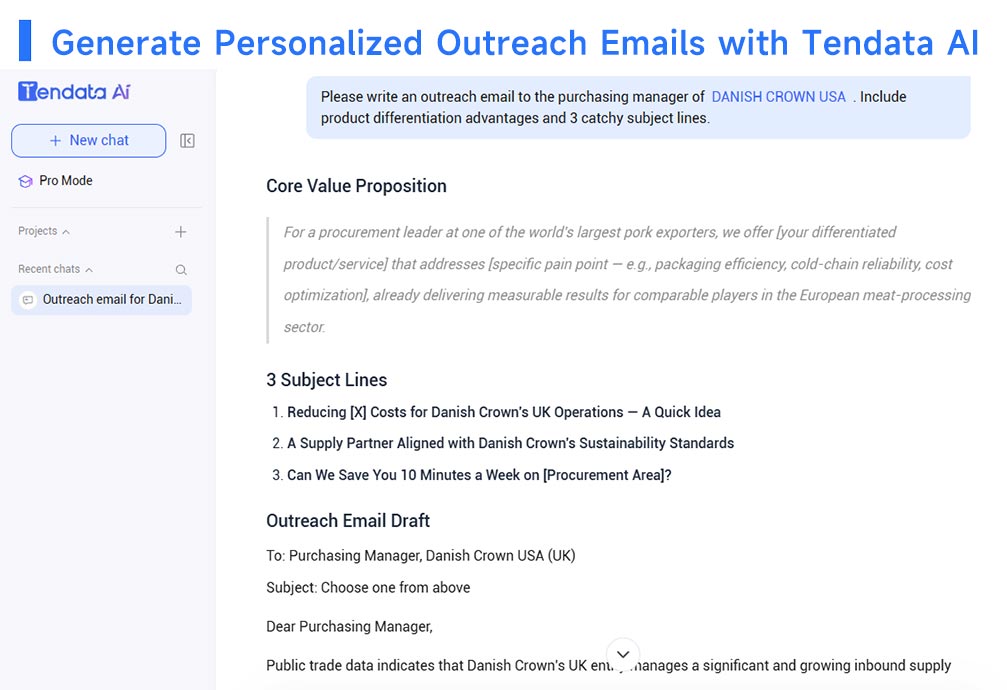
With Tendata AI, sales teams can use trade data and company intelligence to research prospects and generate personalized outreach based on each company's business context and purchasing activity.
The value is not simply “AI writes emails faster.”
The bigger opportunity is:
AI helps you research faster, so your emails have a better reason to exist.
>>Generate a sales email with Tendata AI in one click<<
Don't Measure Cold Email by Volume Alone
Sending 1,000 emails sounds impressive.
But the number of emails sent is not necessarily the most meaningful metric.
A better way to think about the process is:
Right Company → Right Person → Relevant Reason → Personalized Message → Consistent Follow-Up
If the first step is wrong, writing a better email won't solve the problem.
If the second step is wrong, your carefully written message may never reach the person who matters.
If the third step is missing, personalization may still feel superficial.
And even a strong first email may not generate an immediate response.
Cold outreach is usually a process, not a single message.
The Real Problem May Not Be Your Product
If you've sent hundreds or even thousands of cold emails without getting meaningful responses, don't immediately assume that nobody needs your product.
First ask:
· Did I reach the right companies?
· Did I reach the right people?
· Did I give them a reason to care?
· Did my email show that I understood their business?
In international trade, successful outbound sales often comes down to these details.
The difference between a cold email that gets deleted and one that starts a conversation may not be another paragraph about your company.
It may simply be that you found the right buyer, the right person, and the right reason to reach out.
Category
Leave Message for Demo Request or Questions