 Exhibition
 B2B Platforms
 Standalone Website
 Social Media
 Emails
Why Exporters Are Diversifying Their Customer Acquisition Strategies?
 Trade Data Provider
 2026-10-13
After more than a decade in international trade, I’ve seen B2B marketplaces transform from relatively easy growth opportunities into increasingly crowded and expensive sales channels.
Platforms like Alibaba.com continue to offer value for exporters, particularly those entering international markets. However, the traditional approach of relying heavily on marketplace traffic is becoming less effective for businesses looking to build sustainable growth.
The real question is no longer whether B2B platforms work. It’s whether they should remain the primary source of new business.

Who Still Benefits Most from Alibaba.com?
1. New Exporters and Small-Scale Manufacturers
For businesses with limited overseas sales experience, Alibaba.com offers a relatively straightforward entry point into international markets.
After purchasing a membership and uploading product listings, sellers can begin testing market demand and receiving inquiries without building a complete customer acquisition system from scratch.
For new exporters, this provides several practical benefits:
(1)Market validation: Understand which products attract interest from overseas buyers.
(2)Sales experience: Learn how to handle inquiries, negotiate prices, and communicate with international customers.
(3)Initial customer acquisition: Generate early business opportunities without relying entirely on independent prospecting.
The platform can be particularly useful for standardized products with competitive pricing and high sales volumes, including everyday consumer goods and basic industrial components.
For these businesses, marketplace exposure can provide a convenient starting point.
2. Established Manufacturers with Substantial Marketing Budgets
Large manufacturers and established exporters often approach B2B marketplaces differently. Rather than relying solely on organic exposure, they invest in premium memberships, pay-per-click advertising, keyword bidding, and featured placements.
Their larger budgets and production capacity allow them to compete more aggressively for buyer attention.
However, this creates an increasingly uneven competitive environment. As more suppliers compete for the same audience, smaller exporters may find it difficult to maintain visibility without continuously increasing their advertising expenditure.
In other words, having a good product is no longer enough. Businesses must also compete for access to potential buyers.
Why Are More Exporters Rethinking Their B2B Platform Investments?
For experienced export teams, the challenge is not simply the cost of maintaining a marketplace account. It is the growing gap between acquisition spending and the long-term value of the customers generated.
1. Higher Marketing Costs and Greater Price Pressure
Membership fees, advertising budgets, and promotional expenses can add up quickly. Depending on the platform, subscription tier, and advertising strategy, the total annual investment may reach tens or even hundreds of thousands of RMB.
Meanwhile, multiple suppliers often compete for the same keywords and buyer inquiries.
When prospective buyers contact several manufacturers simultaneously, price can become the dominant factor in their decision-making process. This puts pressure on margins, particularly for suppliers offering customized products, technical solutions, or specialized manufacturing services.
The result is a frustrating cycle: spend more to attract attention, compete harder on price, and still struggle to secure high-value orders.
For many exporters, improving the quality of prospects is becoming just as important as increasing inquiry volume.
2. Limited Control Over Customer Acquisition
When most leads come from a third-party marketplace, a company's sales pipeline can become closely tied to that platform's policies, ranking algorithms, and advertising system.
Reducing advertising expenditure may quickly reduce exposure. Changes to platform rules can also affect how businesses reach potential buyers.
This dependency creates several long-term challenges:
(1)Limited control over lead generation and visibility.
(2)Difficulty developing an independent, recognizable brand.
(3)Greater exposure to changes in platform policies and account restrictions.
(4)Less flexibility in building a diversified customer acquisition system.
A marketplace can help generate inquiries, but it should not be the only place where a business develops relationships with international buyers.
3. More Inquiries Do Not Always Mean Better Prospects
Inquiry volume is an easy metric to measure, but it does not necessarily reflect the commercial value of a lead.
Some inquiries come from intermediaries, small-scale resellers, or buyers who are simply collecting quotations from multiple suppliers. Others may have limited purchasing capacity or no immediate intention to place an order.
This can be especially challenging for exporters selling industrial machinery, high-value equipment, custom-manufactured products, and other complex solutions.
These businesses often need to identify buyers with relevant purchasing histories, established operations, and genuine demand—not just companies willing to submit an inquiry form.
A more targeted approach to prospecting can help sales teams spend less time screening unsuitable contacts and more time developing meaningful business opportunities.
4. Increasing Supplier Competition
In many product categories, the number of suppliers competing for online visibility has increased substantially.
Paid placements can help businesses maintain exposure, but smaller exporters may struggle to compete against companies with significantly larger advertising budgets.
As a result, depending exclusively on marketplace traffic can limit a company's ability to differentiate itself.
Exporters increasingly need additional ways to identify buyers, demonstrate their expertise, and establish direct relationships outside the marketplace environment.
How Experienced Exporters Are Building More Diversified Sales Channels
Rather than abandoning B2B marketplaces altogether, many businesses can benefit from treating them as one component of a broader customer acquisition strategy.
The objective is to combine inbound marketing, data-driven prospecting, and relationship-based sales development.
1. Build an Independent Website Through SEO and Paid Search
An independent website gives exporters greater control over their brand positioning, product information, and customer experience.
Search engine optimization (SEO) helps businesses attract prospects who are actively researching particular products, suppliers, or technical solutions. Paid search can complement this strategy by generating more immediate exposure for relevant commercial keywords.
Compared with relying exclusively on a marketplace, a well-developed website can help exporters:
(1)Build long-term brand recognition.
(2)Attract buyers searching for specific products or capabilities.
(3)Publish technical resources and case studies that demonstrate expertise.
(4)Create direct channels for inquiries and lead generation.
SEO requires consistent effort, and results are not guaranteed. However, useful content and a strong website can become valuable long-term assets rather than ongoing purchases of marketplace visibility.
2. Use Global Trade Data to Identify Real Buyers
One important shift in international sales is the move from waiting for buyers to submit inquiries toward proactively identifying companies with relevant purchasing activity.
This is where global trade data platforms such asTendatacan support a more targeted prospecting strategy.
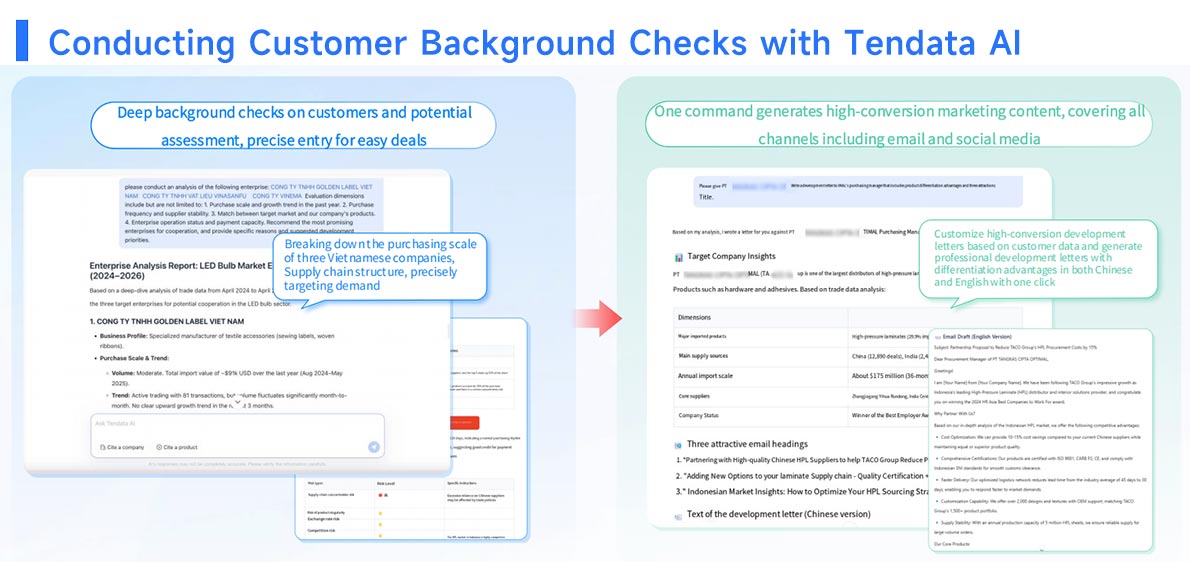
Instead of starting with a broad list of companies that might be interested in a product, exporters can use import and export records to investigate actual trade activity, discover potential buyers, and evaluate companies based on their purchasing patterns.
A practical workflow may look like this:
Step 1: Define the target market. Identify priority countries, product categories, and potential customer profiles.
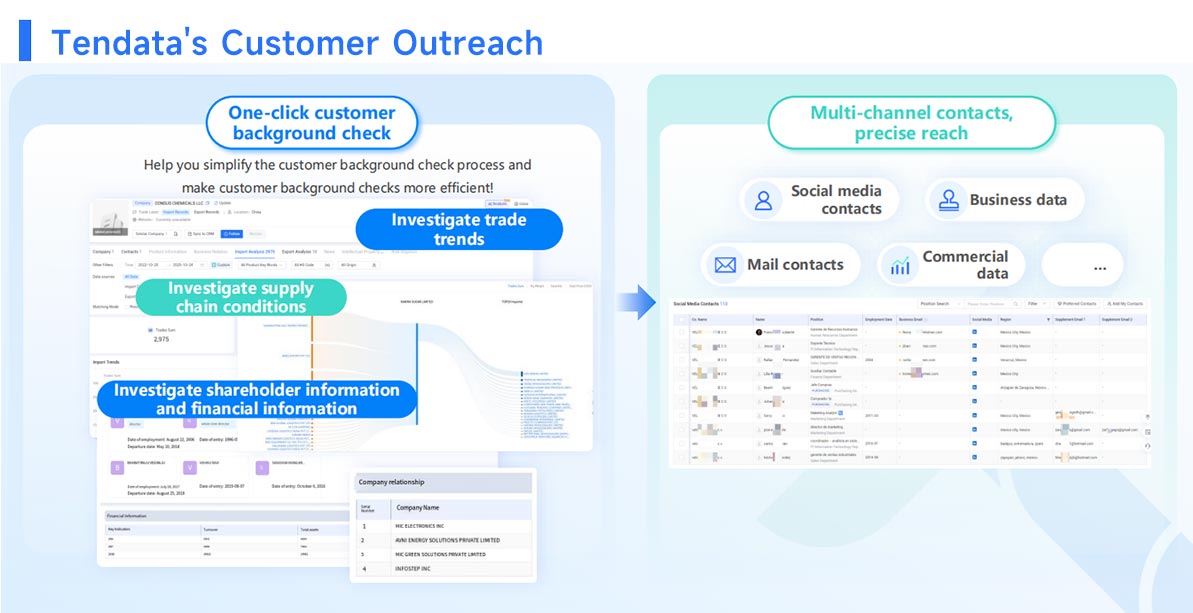
Step 2: Discover relevant companies. Use Tendata's global trade data to search for importers and exporters associated with specific products and trade activities.
Step 3: Analyze purchasing behavior. Examine available shipment records, supplier relationships, product details, and purchasing trends to assess whether a company matches your target profile.
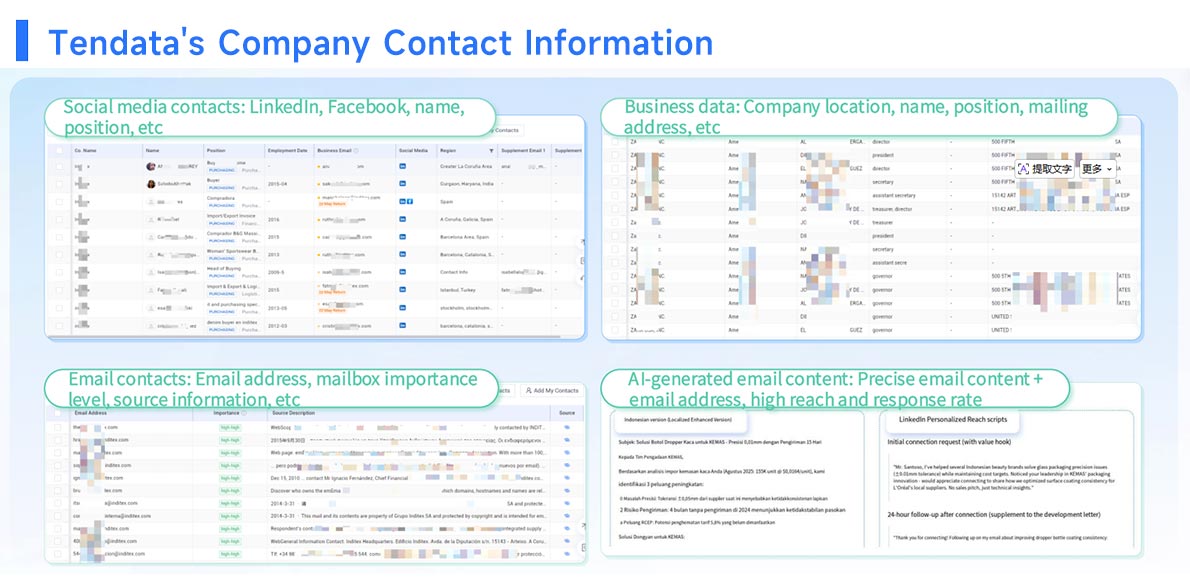
Step 4: Research and qualify prospects. Review company information and verify relevant business details before investing time in outreach.
Step 5: Establish direct contact. Reach out to suitable prospects through professional email, LinkedIn, or other appropriate business communication channels.
>>Get A Free Demo<<
This approach helps exporters move beyond generic lead lists and focus on companies with evidence of relevant trade activity.
The advantage is not simply having more data. It is having a stronger basis for deciding which companies deserve attention.
Of course, trade records alone do not guarantee that a company is ready to buy or that a particular contact is the final decision-maker. Effective prospecting still requires company verification, relevant messaging, and consistent follow-up.
A credible website, a professional LinkedIn profile, and a clear value proposition can also make a significant difference when approaching buyers who have never interacted with your business before.
For exporters looking to reduce their dependence on marketplace inquiries, combining Tendata's trade intelligence with a structured outbound sales process offers another way to develop potential customers directly.
3. Turn Existing Customers into a Referral Channel
Existing customers can be one of the most valuable sources of new business.
A satisfied buyer may introduce your company to other businesses in the same industry, recommend you to a purchasing team, or provide the credibility needed to open doors in a new market.
Referral-driven opportunities often begin with an advantage that cold outreach cannot easily replicate: an existing level of trust.
To develop this channel, exporters should focus on:
(1)Delivering consistent product quality and reliable service.
(2)Maintaining relationships after the initial transaction.
(3)Asking satisfied customers for introductions when appropriate.
(4)Building partnerships with complementary businesses.
Referrals are not entirely predictable, but they can complement other acquisition channels and reduce reliance on paid lead generation.
Build a Sales System, Not Just a Lead Source
Alibaba.com remains a useful channel for many exporters, especially businesses that are new to international trade or need access to an existing pool of overseas buyers.
However, relying on a single marketplace can expose a company to rising acquisition costs, intense price competition, and limited control over its sales pipeline.
A more sustainable strategy is to diversify.
Use B2B platforms to capture relevant inquiries. Develop an independent website to strengthen brand visibility. Use global trade data through solutions such as Tendata to identify and evaluate potential buyers. Build long-term relationships that generate repeat business and referrals.
Ultimately, successful international sales are not just about attracting more inquiries. They are about finding the right companies, understanding their needs, and building relationships that lead to profitable, long-term partnerships.
The goal is not to replace one customer acquisition channel with another. It is to build a diversified, data-driven sales system that gives your business greater control over its growth.
Category
Leave Message for Demo Request or Questions