 Exhibition
 B2B Platforms
 Standalone Website
 Social Media
 Emails
5 Key Factors for Evaluating Trade Leads with a Trade Data Website
 Trade Data Provider
 2026-09-30
Generating leads is only half the battle in international trade.
The harder question is:How many of those leads are actually worth pursuing?
A company may receive hundreds of inquiries from B2B platforms, websites, trade shows, social media, cold emails, or other channels. But a high number of inquiries does not necessarily mean a high-quality sales pipeline.
Some buyers have a genuine purchasing need. Others are simply comparing prices. Some inquiries reach decision-makers, while others come from junior employees who have little influence over the final purchase. Some prospects are a strong fit for your products, while others require specifications, certifications, prices, or delivery conditions that your company cannot realistically provide.
That is why international trade companies need to look beyond lead quantity and evaluate lead quality.
Here are five dimensions that can help.
1. How Real Is the Buyer's Demand?
The first question is simple:
Does the buyer actually need the product?
Not all inquiries represent the same level of purchasing intent.
A buyer who actively contacts a supplier because they are looking for a specific product usually demonstrates a stronger initial signal than a prospect who has never shown any purchasing interest and is being approached through outbound sales.
This does not mean inbound inquiries are automatically high quality or outbound leads are low quality. Rather, the source and context of the inquiry provide important clues about intent.
For example, a buyer asking about:
· A specific product model
· Required specifications
· MOQ
· Certifications
· Production capacity
· Lead time
· Shipping terms
· Pricing for a defined quantity
is providing much more useful information than someone simply asking:"Please send me your best price."
The more specific the purchasing requirements, the easier it is to assess whether there is a genuine business opportunity.
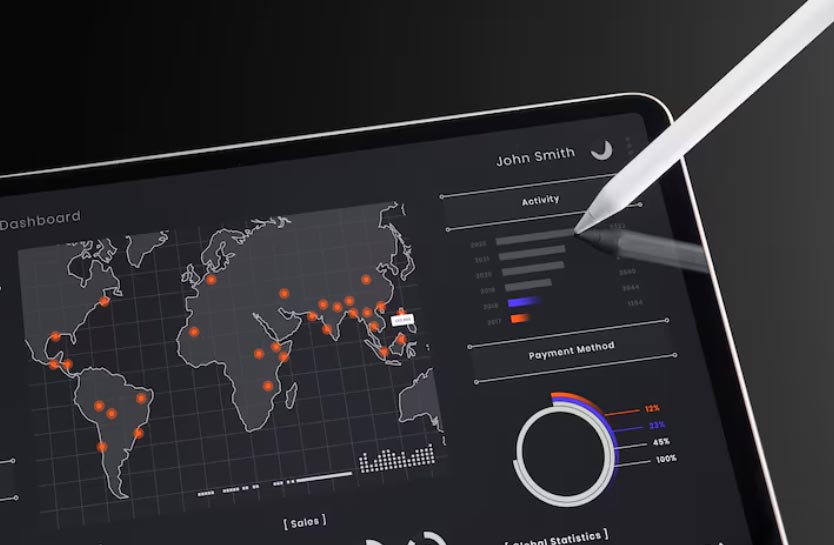
For outbound prospecting, trade intelligence can provide another layer of evidence. Instead of contacting companies simply because they appear to operate in your industry, you can investigate whether they have actually imported similar products or maintained relevant purchasing activity.
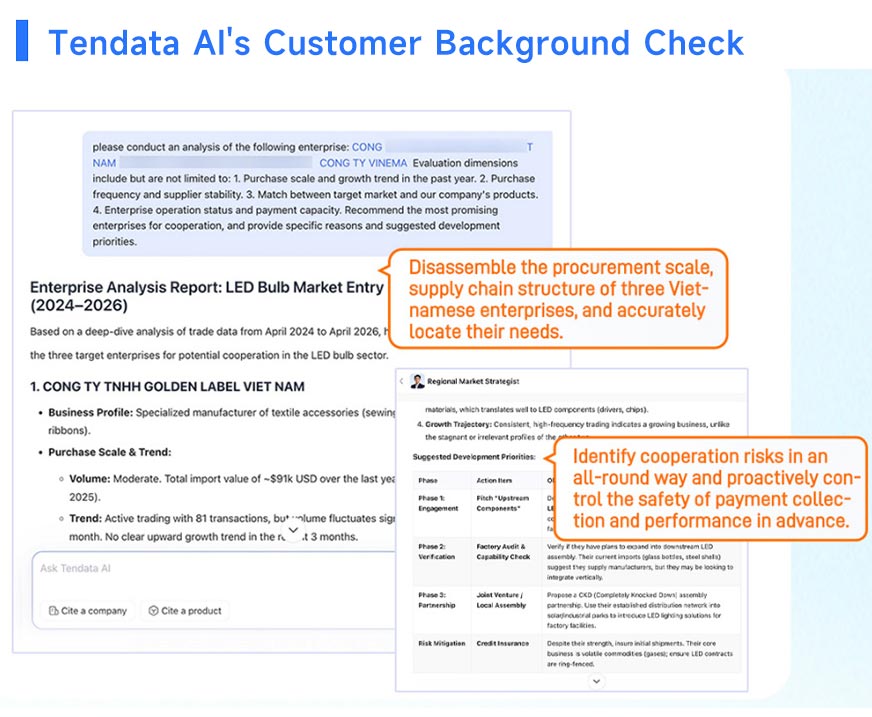
A trade data website can be particularly useful at this stage. It can help sales teams move beyond surface-level company information and investigate purchasing activity, product categories, sourcing markets, and other trade-related signals before investing time in outreach.
>>Use Tendata to check Company Background<<
2. Who Is Behind the Inquiry?
The second dimension is the decision-making level of the contact.
The same inquiry can have very different commercial value depending on who sent it.
Compare these two situations:
Scenario A:A procurement manager contacts you about a product they are actively sourcing.
Scenario B:A junior employee is asked to collect quotations from several suppliers.
Both may send almost identical inquiries. But the path from inquiry to purchase can be very different.
For B2B sales, relevant contacts may include:
· Procurement Manager
· Purchasing Manager
· Sourcing Manager
· Supply Chain Director
· Product Manager
· Technical Director
· General Manager
· Owner or CEO
The exact role depends on the company and product.
For complex machinery, industrial equipment, or technical solutions, technical and product teams may influence the decision alongside procurement. For standardized products, purchasing teams may have greater control.
This means that lead quality is not only about the company—it is also about the person behind the inquiry.
If your sales team spends most of its time communicating with people who cannot influence the purchasing decision, even a large number of inquiries may produce limited results.
3. How Well Does the Buyer Match Your Product?
A buyer can have genuine demand and still be a poor prospect.
Why?
Because demand does not automatically equal product fit.
A useful lead should match your company's actual capabilities.
Consider factors such as:
· Target price range
· Product specifications
· Certifications
· MOQ requirements
· Production capacity
· Customization requirements
· Quality standards
· Delivery expectations
· Payment terms
· Target market
Suppose a buyer needs a product with a certification your factory does not have. Or their expected price is significantly below your production cost. Or they require a monthly capacity far beyond what you can supply.
The buyer may be completely legitimate, but the commercial fit is weak.
This is why lead qualification should answer two separate questions:
Does the buyer need this product?andCan we realistically satisfy that need?
The closer the match between customer requirements and your competitive strengths, the more valuable the lead becomes.
4. How Much Competition Is Behind the Inquiry?
Another factor that is often overlooked is competitive density.
Imagine receiving an inquiry for a standard product that has been posted publicly on a major B2B marketplace.
If dozens or even hundreds of suppliers are responding to the same request, the buyer has considerable negotiating power.
The result can be:
· More suppliers competing on price
· Lower margins
· More quotation requests
· Longer comparison cycles
· Less differentiation
· Lower conversion rates
By contrast, identifying a company that is actively purchasing your product—but has not publicly posted a sourcing request—can create a different sales situation.
Trade data can be particularly useful here.
Instead of waiting for buyers to publish an inquiry, exporters can research companies that have demonstrated purchasing activity and approach them proactively.
For example, you might discover that a company has been importing a particular product regularly, but its supplier base is relatively concentrated.
That information does not prove that the company is looking for a new supplier. However, it can provide a business reason for further research and a more relevant sales conversation.
5. Can the Lead Become a Long-Term Customer Asset?
The fifth dimension goes beyond the individual inquiry.
It asks:Who owns the customer relationship and the information generated from it?
This matters because not every lead becomes an asset to the company.
On some platforms, the customer relationship remains heavily dependent on the platform itself. The supplier may receive an inquiry, respond to it, and compete for the order, but have limited visibility into the broader customer relationship.
A stronger customer acquisition system should allow companies to gradually build their own customer database.
Over time, that database can include:
· Company information
· Purchasing history
· Product interests
· Key contacts
· Communication records
· Previous quotations
· Customer requirements
· Follow-up history
· Purchase cycles
· Supplier information
· Business developments
This turns individual inquiries into long-term sales intelligence.
The goal is not simply to win one order.
It is to build knowledge that can help your team understand, develop, and retain the customer over time.
No Single Customer Acquisition Channel Is Perfect
Once these five dimensions are considered together, one thing becomes clear:
There is no single customer acquisition channel that is perfect for every international trade company.
Different channels solve different problems.
1. B2B Platforms
They can provide access to buyers who are already searching for products, but competition can be intense and suppliers may have limited control over the customer relationship.
2. Trade Shows
They offer face-to-face communication and can be particularly valuable for products that require demonstrations, technical discussions, or relationship building. However, they require significant time and investment.
3. Independent Websites
A well-built B2B website can help companies establish their own brand, attract organic traffic, capture inquiries, and build customer relationships outside third-party platforms.
4. Social Media
LinkedIn and other social platforms can help sales teams identify companies and decision-makers, understand their business context, and build relationships over time.
5. Cold Email
Cold outreach gives companies more control over who they target. But the quality of the results depends heavily on prospect selection, contact accuracy, personalization, and follow-up.
6. Trade Data
Trade intelligence can help exporters identify companies with actual import and purchasing activity rather than relying entirely on publicly stated demand.
A trade data website can serve as one research layer within this process, helping sales teams identify relevant companies before deciding which prospects deserve deeper research and outreach.
Each channel has strengths and limitations.
The question is therefore not:"Which channel should we choose?"
A better question is:"How can we connect different channels into one customer acquisition system?"
Combine Channels Instead of Choosing Only One
The most practical approach for many international trade companies is to combine complementary channels.
For example:
1. Cold Email + Trade Data
Use trade data to identify companies with relevant purchasing activity, research their products and suppliers, find the right contacts, and then launch targeted outreach.
2. Independent Website + Social Media
Use the website to establish credibility and capture demand, while using LinkedIn and other social platforms to reach decision-makers and distribute useful content.
3. Trade Shows + CRM
Use exhibitions to generate face-to-face conversations, then organize contacts and follow-ups in a CRM system instead of allowing valuable relationships to disappear after the event.
4. Trade Data + LinkedIn + Email
Use trade data to identify the company, LinkedIn to understand the people and business context, and email to start a direct conversation.
The strength comes from the connection between channels, not from any single channel operating in isolation.
From Lead Generation to a Customer Acquisition System
The fundamentals of international trade customer acquisition are changing.
Ten years ago, many exporters could rely heavily on a single B2B platform, a few trade shows, or cold email campaigns and still generate a steady flow of business.
Today, buyers have more options, suppliers face more competition, and customer acquisition channels have become increasingly fragmented.
At the same time, buyers are becoming more selective.
This means companies need to think beyond:
"How many inquiries did we receive this month?"
Instead, ask:
· How many inquiries came from real buyers?
· How many came from the right decision-makers?
· How many matched our products and capabilities?
· How much competition were we facing?
· How much customer intelligence did we retain?
These questions provide a much clearer picture of acquisition performance.
Build a System Around the Customer
A modern international trade sales process does not need to depend on one platform.
It can connect multiple sources into a single workflow:
Market Research → Buyer Discovery → Lead Qualification → Decision-Maker Identification → Personalized Outreach → Follow-Up → CRM → Long-Term Customer Development
Trade data can provide evidence of purchasing activity.
Business directories and company websites can provide additional company information.
LinkedIn and social media can help identify people and understand business context.
Email and messaging channels can turn research into conversations.
CRM systems can preserve the information generated throughout the process.
And AI can help connect these steps and reduce repetitive research and outreach work.
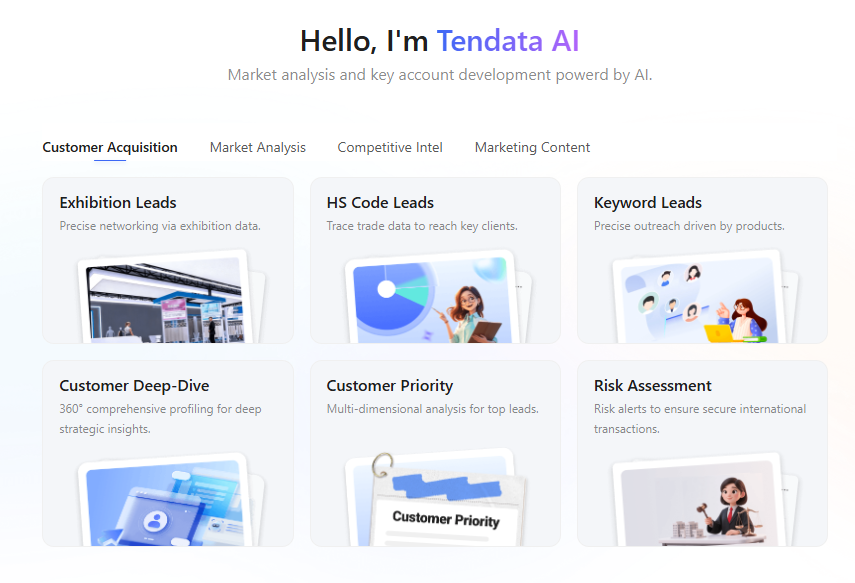
For example, Tendata combines global trade data, company intelligence, and AI analysis to help sales teams research potential buyers, analyze purchasing activity, identify relevant contacts, conduct company due diligence, and generate personalized outreach.
With Tendata AI, these different research steps can be brought into a more connected workflow—from identifying potential importers and exporters to analyzing trade records, researching companies, finding decision-makers, and preparing personalized outreach.
The objective is not to replace every customer acquisition channel.
It is to make the channels work together.
>>Use Tendata AI to Improve your Business<<
Final Thoughts
Lead generation in international trade is no longer simply a numbers game.
A thousand inquiries do not necessarily create a better sales pipeline than one hundred well-qualified opportunities.
When evaluating lead quality, look at five dimensions:
Real Demand → Decision-Maker Level → Product Fit → Competitive Density → Customer Asset Value
Then consider how different acquisition channels can complement one another.
The future of international trade customer development is less about choosing one "best" channel and more about building a system in which data, websites, social media, outbound sales, trade shows, and CRM work together.
A trade data website can help provide the purchasing intelligence behind prospect research, while platforms such as Tendata can connect trade data with company intelligence and AI-assisted analysis.
The goal is not simply to generate more inquiries.
It is to generate better opportunities—and turn those opportunities into long-term customer relationships.
Category
Leave Message for Demo Request or Questions