 Exhibition
 B2B Platforms
 Standalone Website
 Social Media
 Emails
How Importing and Exporting Data Helps Businesses Discover Global Trade Opportunities - Tendata
 Trade Data Provider
 2026-07-30
Global trade is becoming increasingly competitive. For businesses looking to expand internationally, relying only on traditional market research and business directories is no longer enough. Companies need accurate insights into market demand, customer behavior, supplier networks, and competitor activities before making important decisions. This is why importing and exporting data has become an essential resource for exporters, importers, manufacturers, and international sales teams.
Unlike general industry reports that only show market trends, importing and exporting data is collected from actual trade activities. It provides detailed information about how products move across borders, which countries are actively trading, and which companies are participating in global supply chains.
By analyzing importing and exporting data, businesses can discover new market opportunities, identify potential customers, optimize sourcing strategies, and reduce risks when expanding into international markets.

What Is Importing and Exporting Data?
Importing and exporting data refers to information collected from global trade transactions between countries. It records the movement of products from exporters to importers and provides insights into international business activities.
Depending on the data source, importing and exporting data may include:
- Importer and exporter information
- Product descriptions
- HS codes
- Shipment quantities
- Trade values
- Countries of origin and destination
- Ports involved in shipments
- Trading frequency
- Supplier and buyer relationships
For example, a food exporter planning to enter a new market can use importing and exporting data to identify countries with increasing demand, analyze existing suppliers, and discover companies that regularly purchase similar products.
Compared with ordinary company databases, trade data reflects real commercial activities, helping businesses focus on companies that are already active in international trade.
Why Importing and Exporting Data Matters for Global Businesses
Identify Promising International Markets
Choosing the right market is one of the most important steps in global expansion.
Importing and exporting data helps companies understand where demand exists and how markets are developing. By analyzing trade flows, businesses can identify:
- Countries with increasing import demand
- Fast-growing product categories
- Emerging market opportunities
- Changes in global supply chains
For example, a machinery manufacturer can analyze import trends across different regions to determine which countries have stronger demand for industrial equipment.
Find Reliable Buyers and Suppliers
One of the biggest challenges in international trade is finding trustworthy business partners.
Importing and exporting data allows companies to discover active buyers and suppliers based on actual shipment records. Businesses can evaluate:
- Purchasing history
- Import frequency
- Product categories
- Trading volumes
- Long-term business activity
This helps sales teams avoid wasting time on inactive leads and focus on companies with real purchasing potential.
Monitor Competitors and Industry Changes
Global markets change quickly. Competitors may enter new regions, adjust pricing strategies, or develop relationships with new suppliers.
Through importing and exporting data analysis, companies can track competitor movements, understand supply chain changes, and identify new market opportunities.
These insights allow businesses to make faster decisions and stay competitive in international markets.
Improve Supply Chain Planning
For importers, supplier selection and supply chain stability are critical.
Trade data helps businesses compare suppliers, understand shipment history, and evaluate potential partners before cooperation.
By analyzing previous trade activities, companies can reduce sourcing risks and build more reliable international supply networks.
10 Free Customs Data Platforms for Importing and Exporting Data Analysis
Many businesses begin their trade research with free customs data platforms. While free tools may not provide the same level of company details and shipment insights as professional databases, they are still useful for understanding market trends, trade volumes, and product movements.
Below are 10 free customs data platforms that businesses can explore:
1. CustomsInfo Database
Website: https://www.customsinfo.com
CustomsInfo Database provides customs tariff information, compliance resources, and international trade-related data. Businesses can use it to research product classifications, tariff requirements, and customs regulations before entering new markets.
2. Australian Bureau of Statistics International Trade Data
Website: https://www.abs.gov.au
Australian Bureau of Statistics offers official Australian import and export statistics. Users can analyze trade values, product categories, and major trading partners to understand Australia’s international trade activities.
3. UK Trade Info
Website: https://www.uktradeinfo.com
UK Trade Info provides official UK trade statistics, including import and export data categorized by products, industries, and trading countries.
4. Statistics Canada Trade Data
Website: https://www.statcan.gc.ca
Statistics Canada provides detailed Canadian international trade statistics. Businesses can explore commodity-level trade information, import and export values, and market trends.
5. Japan Customs Trade Statistics
Website: https://www.customs.go.jp/toukei/info/index_e.htm
Japan Customs Trade Statistics provides official Japanese customs data, including import and export activities by product categories, countries, and trading partners.
6. Korea Customs Service Trade Statistics
Website: https://www.customs.go.kr
Korea Customs Service provides South Korea trade statistics and customs information. Businesses can use it to research Korean import and export markets and understand trade patterns.
7. Brazil Comex Stat
Website: https://comexstat.mdic.gov.br
Comex Stat provides Brazil’s official foreign trade statistics, allowing users to analyze trade values, products, destinations, and international trade trends.
8. Mexico Data México
Website: https://datamexico.org
Data México provides economic and trade information about Mexico, including international trade data, industry insights, and market analysis resources.
9. New Zealand Trade Information
Website: https://www.mfat.govt.nz
New Zealand Ministry of Foreign Affairs and Trade provides information about New Zealand’s trade relationships, export industries, and international market opportunities.
10. Eurasian Economic Commission Trade Data
Website: https://eec.eaeunion.org
Eurasian Economic Commission provides regional economic and trade information related to Eurasian Economic Union members, helping businesses understand regional trade activities.
Although these platforms are useful for basic trade research, companies looking for buyer discovery, competitor analysis, and detailed shipment-level insights usually need professional importing and exporting data solutions.
Limitations of Free Customs Data Platforms
Free customs data platforms are valuable resources for businesses starting their international trade research. They can help users understand overall market trends, trade volumes, product categories, and country-level import and export activities.
However, free platforms often have limitations when businesses need to make more specific commercial decisions.
For example, many free customs databases mainly provide aggregated trade statistics rather than detailed company-level information. Businesses may know which countries import a product, but they may not know who the actual buyers are, how frequently they purchase, or which suppliers they work with.
Common challenges of free customs data platforms include:
- Limited access to importer and exporter details
- Lack of detailed shipment-level information
- Insufficient buyer and supplier insights
- Limited competitor tracking capabilities
- Difficulty identifying high-quality sales leads
- More manual effort required for data analysis
For companies focused on international sales, sourcing, and market expansion, simply understanding trade volumes is often not enough. They need actionable intelligence that helps them find customers, evaluate competitors, and identify the right business opportunities faster.
This is why professional importing and exporting data platforms have become increasingly important for global businesses.
How Tendata Helps Businesses Maximize the Value of Importing and Exporting Data
While free customs data platforms provide a useful starting point, businesses looking to develop international markets need more than basic trade statistics. They require detailed company insights, buyer intelligence, competitor analysis, and efficient tools to transform trade data into business opportunities.
As a one-stop paid customs data platform, Tendata provides global importing and exporting data combined with advanced analysis tools to help businesses discover markets, identify qualified leads, monitor competitors, and make smarter trade decisions.
Understand Market Characteristics With Real Trade Insights
Before entering a new market, businesses need to understand product demand, market trends, and trade patterns.
Tendata helps users analyze global trade flows, identify major importing and exporting countries, and discover potential opportunities through detailed customs data.
For example, an agricultural company exporting onions can use HS code 070310 to analyze international onion trade activities, including:
Major importing markets
Leading exporters
Active buyers
Supply chain changes
Market demand trends
With these insights, companies can better evaluate market potential and create more effective expansion strategies.
>>> Tendata’s Onions Market Lifecycle Analysis <<<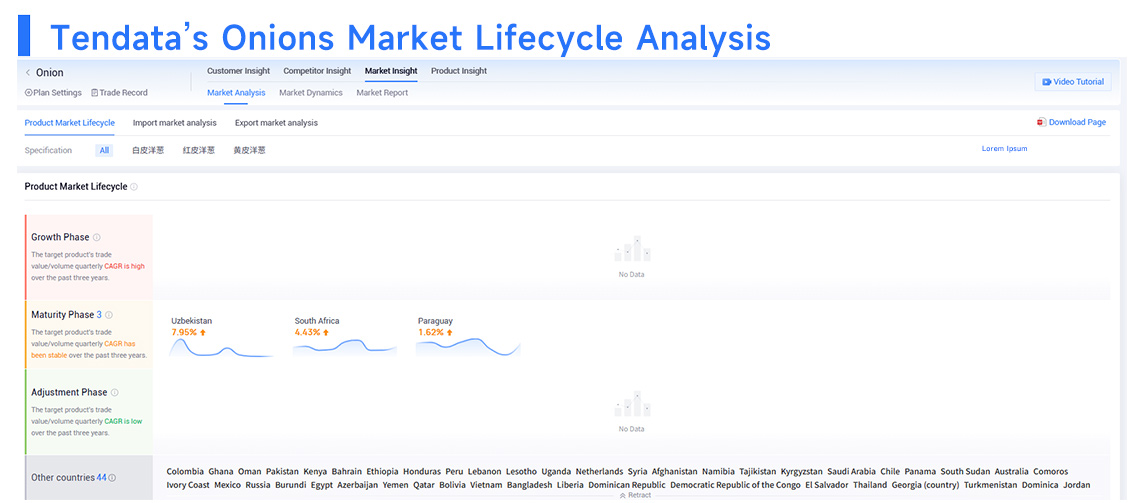
Analyze Core Competitors and Market Opportunities
Understanding competitors is essential for developing successful trade strategies.
Tendata enables businesses to monitor competitor activities through importing and exporting data, helping them understand:
Competitor export markets
Transaction frequency
Product movement trends
Supply chain relationships
Pricing changes
These insights help companies identify competitor strengths and weaknesses, discover market gaps, and develop strategies to gain a competitive advantage.
>>> Tendata’s Onions Competitive Company List in 2025 <<<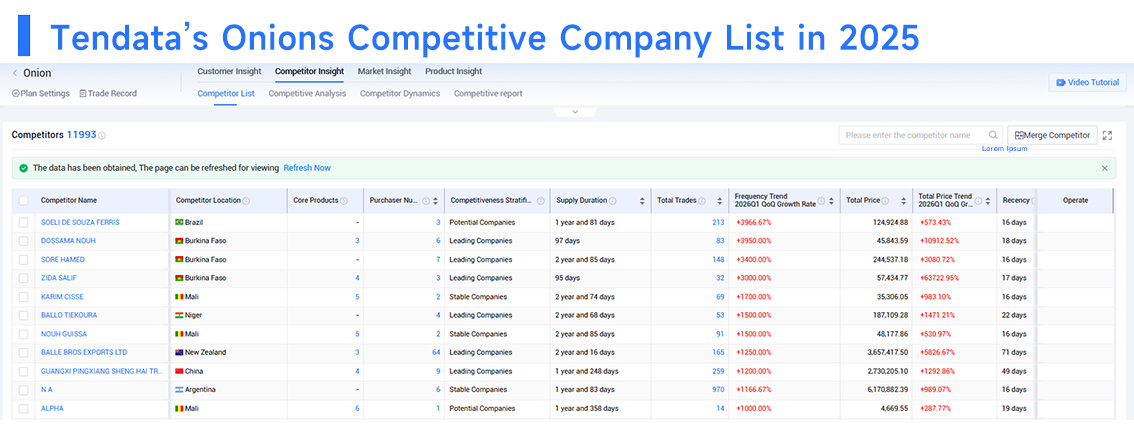
>>> Tendata’s Onions Competitive Company Analysis <<<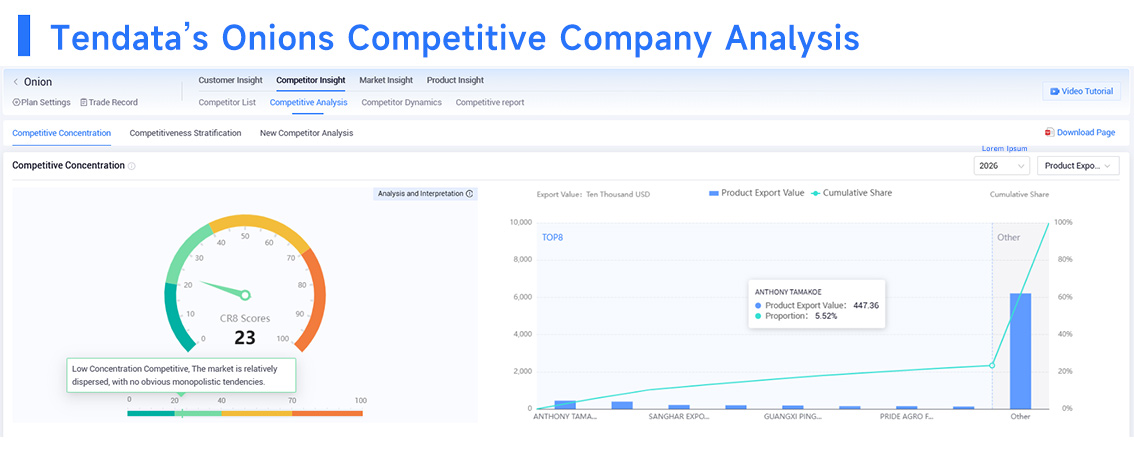
Develop High-Quality Leads Based on Real Import Activities
Finding qualified buyers is one of the most important tasks for exporters.
Instead of relying on outdated directories, Tendata helps businesses discover potential customers based on actual import records.
Users can analyze buyer information such as:
Purchasing behavior
Import frequency
Order quantities
Product preferences
Buying cycles
Tendata also includes a built-in contact database that helps users find decision-makers through business contact information and social media channels, including LinkedIn and Facebook profiles. This allows sales teams to connect with the right contacts more efficiently.
>>> Click to View the Full List <<<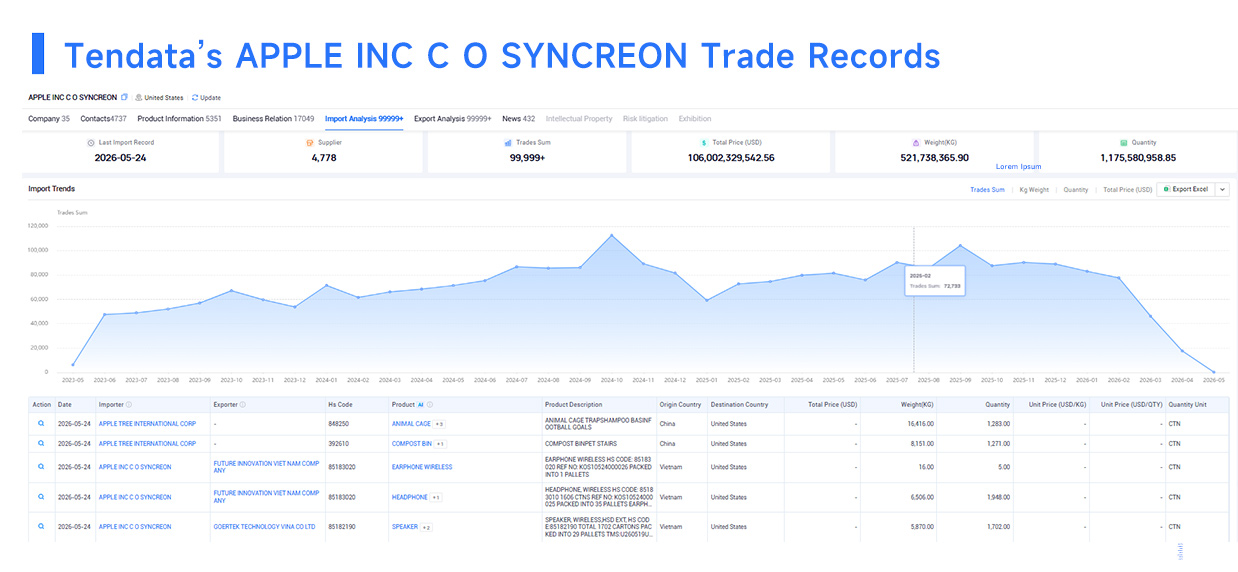
Tendata AI Turns Trade Data Into Actionable Intelligence
Large volumes of customs data can be difficult to analyze manually.
Tendata AI transforms complex trade data into actionable insights. Powered by Tendata’s large language model, it helps users quickly understand market trends, customer behaviors, and competitor activities.
With AI-powered analysis, businesses can:
- Identify market opportunities faster
- Understand customer and competitor behaviors
- Reduce manual research time
- Improve decision-making efficiency
Instead of being overwhelmed by large amounts of trade information, companies can access clearer insights and take action with greater confidence.
>>> Get a Free Demo for Tendata AI <<<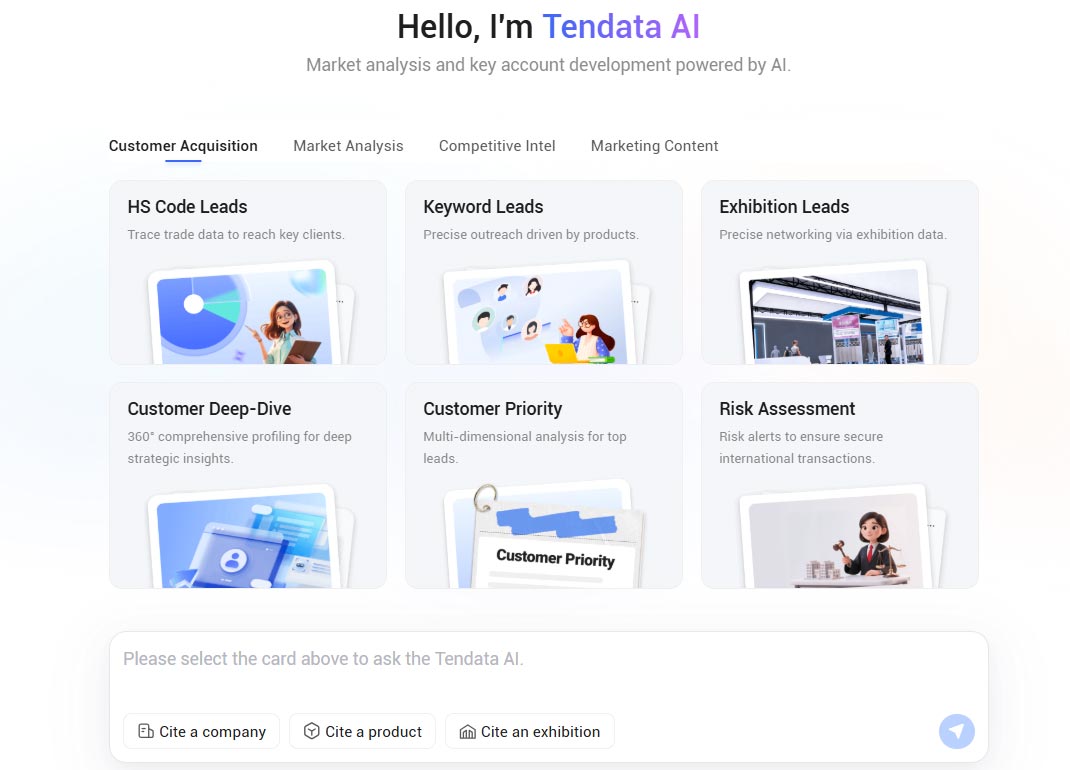
Importing and Exporting Data Helps Businesses Build Smarter Trade Strategies
In today’s global economy, businesses need accurate information to compete effectively.
Importing and exporting data helps companies understand markets, identify buyers, analyze competitors, and optimize supply chains.
While free customs data platforms are useful for basic research, professional solutions like Tendata provide deeper trade intelligence and actionable insights.
Summary
Importing and exporting data helps businesses discover opportunities, find reliable partners, and make smarter global trade decisions. With comprehensive customs data, buyer insights, and AI-powered analysis, Tendata helps companies turn trade information into real business growth.
Category
Leave Message for Demo Request or Questions