 Exhibition
 B2B Platforms
 Standalone Website
 Social Media
 Emails
Global Import Export Data A Complete Guide to Expanding Worldwide Markets - Tendata
 Trade Data Provider
 2026-08-03
Introduction
Global trade has become increasingly complex as businesses expand across borders. Companies involved in international sourcing, manufacturing, distribution, and sales need reliable information to understand market demand, identify potential buyers, evaluate suppliers, and monitor competitors.
Traditional market research methods often provide limited insights. Today, businesses rely more on global import export data to analyze trade flows, discover new opportunities, and make better decisions.
From tracking shipment trends to identifying active importers and exporters, trade data provides companies with a clearer view of international markets.
With Tendata’s global trade intelligence platform, businesses can access extensive import export data, analyze international shipment activities, discover potential buyers and suppliers, and transform raw trade information into actionable market insights.

What Is Global Import Export Data?
Global import export data refers to detailed records of international trade activities between countries and companies.
This data typically includes:
- Importer and exporter information
- Product descriptions
- HS codes
- Shipment volumes
- Trade values
- Origin and destination countries
- Shipping records
- Supplier and buyer relationships
By analyzing this information, companies can understand:
- Which markets have growing demand
- Who the major industry players are
- Where competitors are sourcing products
- Which suppliers are actively exporting
- What products are moving globally
For businesses entering international markets, global import export data serves as a valuable resource for market research, customer discovery, and business development.
Why Global Import Export Data Matters for International Businesses
1. Discover Global Buyers and Business Opportunities
Finding the right buyers is one of the biggest challenges for companies expanding into international markets.
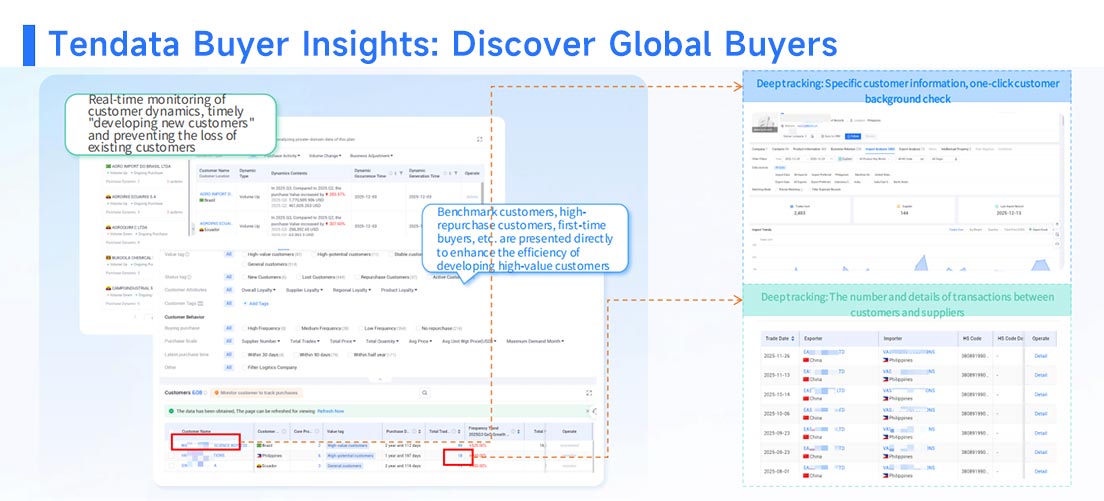
Tendata helps businesses discover potential buyers by analyzing global trade records, shipment activities, and company-level import data. Companies can identify active importers, understand purchasing patterns, and connect with potential customers who are already sourcing similar products.
With accurate trade insights, businesses can build more targeted sales strategies, reduce customer acquisition costs, and explore new international opportunities with greater confidence.
>>> Get a Free Demo from Tendata <<<
Data Source: Tendata Platform
2. Analyze Suppliers and Optimize Global Sourcing
Choosing reliable suppliers is essential for maintaining stable international supply chains.
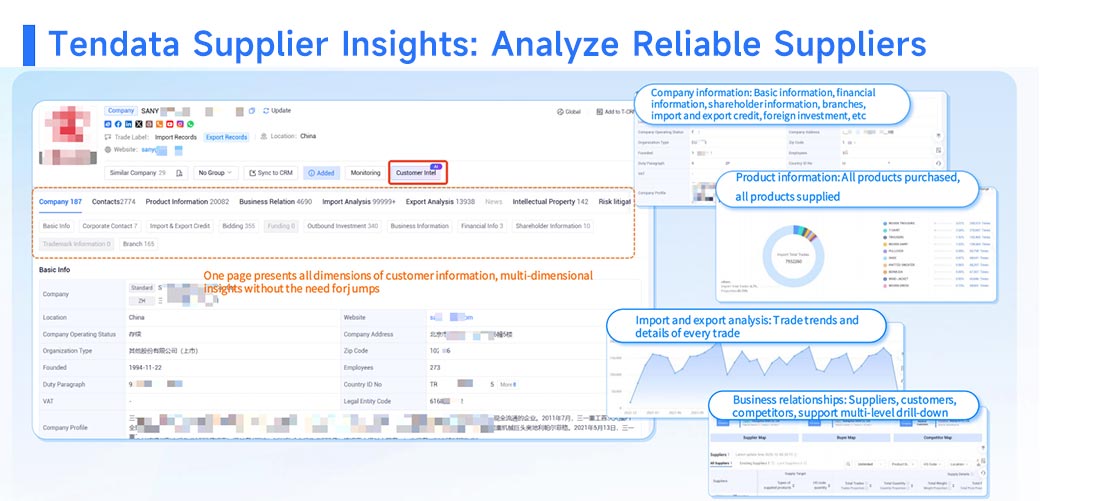
Tendata enables businesses to evaluate suppliers based on real trade activities, including export history, shipment frequency, product categories, and global trading relationships.
By analyzing supplier performance and market presence, companies can compare potential partners, reduce sourcing risks, and make better procurement decisions.
>>> Get a Free Demo from Tendata <<<
Data Source: Tendata Platform
3. Track Competitors and Understand Market Trends
Understanding competitors’ activities is important for staying competitive in global markets.
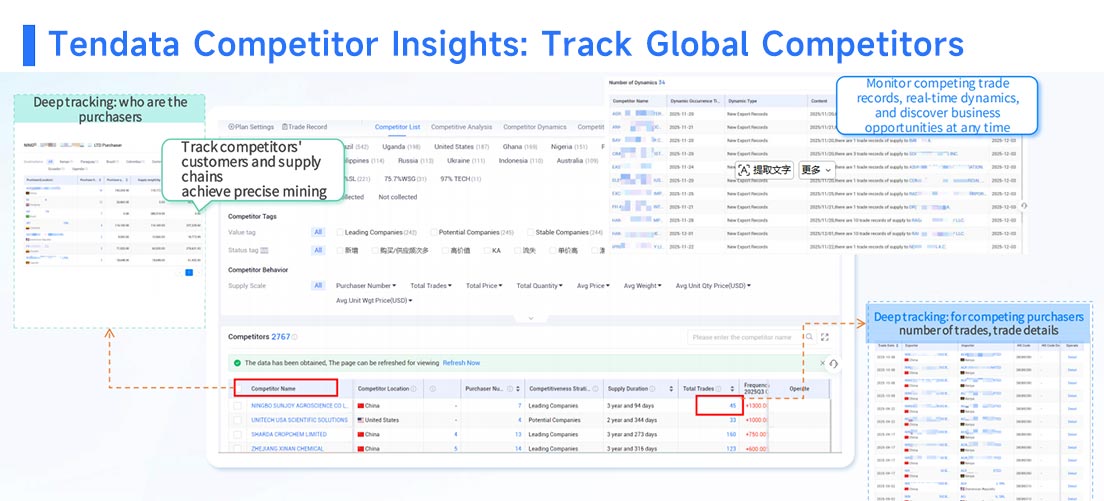
Through Tendata’s global trade intelligence, businesses can monitor competitor movements, analyze their suppliers and export destinations, and identify changes in product strategies.
These insights help companies adjust their market approach, discover new opportunities, and develop more effective international growth strategies.
>>> Get a Free Demo from Tendata <<<
Data Source: Tendata Platform
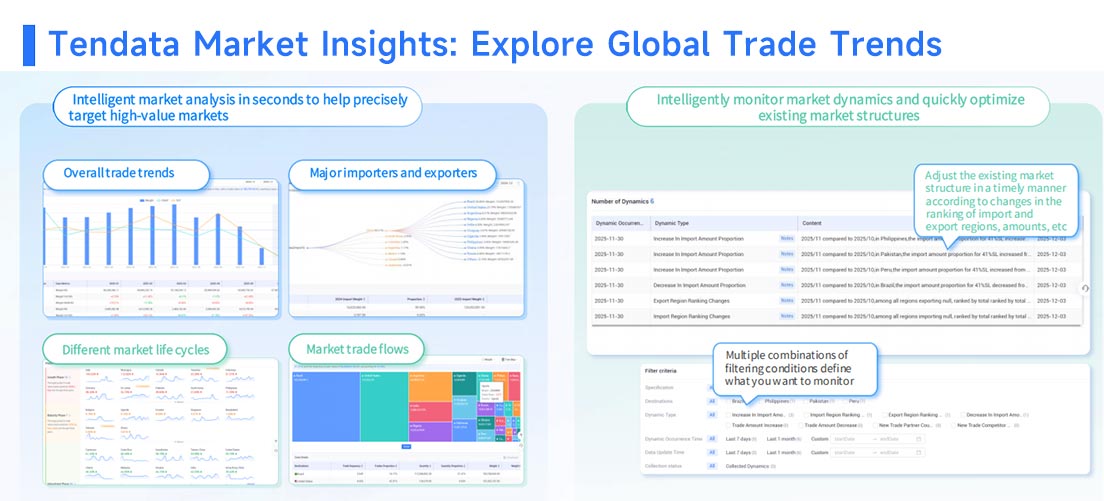
Data Source: Tendata Platform
Top 10 Free Customs Data Platforms for Global Import Export Research
While free customs data platforms are useful for basic market research, businesses that need company-level insights, buyer discovery, and competitor analysis usually require more advanced trade intelligence solutions.
Here are 10 different free customs data resources that businesses can explore:
1. UN Comtrade Database
UN Comtrade is one of the largest public trade databases worldwide. It provides official import and export statistics from many countries, including product categories, trade values, and partner countries.
It is useful for businesses analyzing global trade flows and identifying market trends across different industries.
Website: https://comtradeplus.un.org/
2. World Integrated Trade Solution (WITS)
Developed by the World Bank, WITS provides access to international trade statistics, tariff information, and market analysis tools.
Businesses can use it to compare trade flows between countries and study global market opportunities.
Website: https://wits.worldbank.org/
3. International Trade Centre (ITC) Trade Map
Trade Map offers international trade statistics covering thousands of products and countries.
It helps companies research export potential, target markets, competitor countries, and global product demand.
Website: https://www.trademap.org/
4. U.S. Census Bureau International Trade Data
The U.S. Census Bureau provides official import and export statistics for the United States.
Companies interested in the U.S. market can use this resource to analyze product movement, trade partners, and industry trends.
Website: https://www.census.gov/foreign-trade/
5. Eurostat International Trade Database
Eurostat provides official trade statistics from European Union countries.
It helps businesses understand EU import and export patterns across different industries and product categories.
Website: https://ec.europa.eu/eurostat/
6. Data México Trade Data
Data México provides economic and trade information about Mexico, including import and export statistics.
It is useful for companies researching Latin American markets and analyzing Mexico’s international trade activities.
Website: https://www.economia.gob.mx/datamexico/
7. Japan Trade Statistics
Japan’s Ministry of Finance provides official trade statistics covering Japan’s imports and exports.
Companies exploring Asian markets can use this platform to analyze Japanese trade activities and product trends.
Website: https://www.customs.go.jp/toukei/info/
8. India Trade Portal
India Trade Portal provides trade-related information including export opportunities, product information, and international trade resources.
It supports businesses researching Indian markets and understanding trade potential.
Website: https://www.indiantradeportal.in/
9. Brazil Comex Stat
Brazil Comex Stat provides Brazilian foreign trade statistics, including import and export records by product and country.
It is valuable for companies exploring South American trade opportunities.
Website: https://comexstat.mdic.gov.br/
10. Korea Trade Statistics (K-stat)
Korea Trade Statistics (K-stat) provides official trade statistics from South Korea, including import and export data by product, country, and trade value.
It helps businesses researching Asian markets understand Korean trade trends and international business opportunities.
Website: https://stat.kita.net/
Free Customs Data vs Professional Trade Intelligence Platforms
Free customs databases provide valuable information for initial market research, but they often have limitations, such as:
- Limited company-level details
- Lack of detailed shipment insights
- Difficulty identifying verified buyers and suppliers
- Limited competitor tracking capabilities
For businesses that need deeper market intelligence, professional trade data platforms provide more comprehensive solutions.
Tendata combines global import export data with advanced analytics tools to help businesses:
- Discover potential buyers and suppliers
- Analyze competitor activities
- Track international shipment trends
- Identify new market opportunities
- Develop data-driven global expansion strategies
By transforming complex trade records into actionable insights, Tendata helps companies make smarter decisions in international markets.
Conclusion
Global import export data has become an important resource for companies seeking international growth.
Whether businesses are searching for new customers, evaluating suppliers, or analyzing competitors, accurate trade insights can help reduce uncertainty and improve decision-making.
Free customs data platforms provide a starting point for market research, while professional solutions like Tendata offer deeper intelligence for companies that need reliable global trade insights.
With the right global import export data solution, companies can move beyond traditional market research and develop smarter strategies for international growth. Tendata helps businesses turn global trade data into actionable insights and new business opportunities.
Category
Leave Message for Demo Request or Questions