 Exhibition
 B2B Platforms
 Standalone Website
 Social Media
 Emails
Understanding Worldwide Imports Through Global Trade Data - Tendata
 Trade Data Provider
 2026-08-12
International demand rarely stays in one place. A product that sells well in one country may see stronger growth somewhere else, while established markets can become increasingly competitive.
For manufacturers, exporters, sourcing companies, and international sales teams, understanding world wide imports can provide a broader view of where products are being purchased and how global demand is changing.
Rather than looking at a single country's import figures, businesses can compare markets, products, trading partners, and historical trends to understand how demand is distributed around the world. This can be useful when evaluating new markets, planning product strategies, or deciding where sales resources should be focused.
But worldwide trade statistics are only the starting point. To turn market information into business opportunities, companies also need to understand the businesses behind those trade flows.

What Can Worldwide Imports Data Tell Businesses?
World wide imports data provides information about goods entering markets from international suppliers. Depending on the source, the data can include product categories, HS codes, importing countries, exporting countries, trade values, quantities, and historical trends.
Looking at these figures across multiple markets can reveal patterns that may not be obvious from domestic research alone.
For example, a manufacturer may discover that demand for a particular product is relatively stable in its current market but growing rapidly in several other regions. An exporter can then compare those markets based on import volume, trade growth, competition, and existing supplier relationships.
This type of research can help answer practical questions such as where demand is concentrated, which countries are increasing imports, which products are becoming more active in international trade, and how market conditions have changed over time.
10 Free Platforms for Researching Worldwide Imports
Businesses do not always need to purchase a paid database to start researching international trade. A number of governments and international organizations provide free access to trade statistics and customs-related information.
The following platforms are different from the free resources commonly listed in basic import data searches and can be useful for additional research.
1. World Integrated Trade Solution (WITS)
Website: https://wits.worldbank.org/
WITS, developed by the World Bank, provides access to international merchandise trade, tariff, and non-tariff measure data. Users can explore imports and exports by country and product and perform customized trade analysis.
2. WTO Stats Portal
Website: https://data.wto.org/
The WTO Stats Portal provides merchandise trade statistics covering more than 200 economies. Users can explore annual, quarterly, and monthly import and export data, as well as trade volumes and market access indicators.
3. UNCTADstat Data Hub
Website: https://unctadstat.unctad.org/
UNCTADstat provides international trade statistics covering merchandise, services, trade by partner, trade by product, and other global trade indicators. It is useful for studying broad international trade patterns and long-term market changes.
4. CEPII BACI
Website: https://www.cepii.fr/CEPII/en/bdd_modele/presentation.asp?id=37
BACI provides harmonized annual bilateral trade flows at the product level. The database uses HS classifications and can be useful for analyzing trade relationships between individual countries.
5. OECD International Trade by Commodity Statistics
Website: https://www.oecd.org/en/publications/serials/international-trade-by-commodity-statistics_g1g11c24.html
The OECD provides detailed import and export statistics broken down by commodity and trading partner, making the data useful for comparing trade structures across participating economies.
6. FAOSTAT Trade Data
Website: https://www.fao.org/faostat/
FAOSTAT is particularly useful for companies working with agriculture, food, crops, and livestock products. Its trade database covers international trade in food and agricultural products and provides detailed trade information across many years.
7. EU Access2Markets
Website: https://trade.ec.europa.eu/access-to-markets/
The European Commission's Access2Markets portal combines trade flow statistics with information about tariffs, import procedures, taxes, product requirements, and trade barriers. It can be useful when evaluating how a product can enter a particular market.
8. Global Trade Helpdesk
Website: https://globaltradehelpdesk.org/
The Global Trade Helpdesk brings together trade statistics, market information, tariffs, regulatory requirements, and other resources from multiple international organizations. Businesses can use it to research products, markets, and potential trade opportunities.
9. IMF Direction of Trade Statistics
Website: https://data.imf.org/
The IMF's Direction of Trade Statistics focuses on merchandise trade between countries and their trading partners. It provides bilateral import and export values and includes monthly, quarterly, and annual trade information.
10. Asian Development Bank Data Library
Website: https://data.adb.org/
The ADB Data Library provides economic and trade indicators for economies across Asia and the Pacific. Its datasets include external trade information alongside broader economic indicators, making it useful for regional market research.
What Free Worldwide Imports Data Cannot Tell You
Free databases are useful for understanding the size and direction of international trade, but they usually work best for market-level research.
Suppose an exporter discovers that imports of a particular product are increasing rapidly in a certain country. That is a useful signal, but it does not necessarily tell the sales team which companies to approach.
There are still several unanswered questions:
- Who are the active importers?
- What products are they purchasing?
- Who are their existing suppliers?
- How frequently are they buying?
- Have their purchasing activities changed recently?
For businesses focused on customer acquisition, these details can make the difference between general market research and actionable prospecting.
This is where a deeper layer of trade intelligence becomes valuable.
How Tendata Turns Worldwide Imports Data Into Business Intelligence
Tendata combines global trade records with business information, contact resources, and AI-powered analysis to help companies move from broad market research to more targeted customer development.
Instead of looking at worldwide import statistics as isolated numbers, businesses can use Tendata to investigate the companies and purchasing activities behind those trade flows.
The platform brings together three important data sources: trade data, business data, and internet data. This combination provides a more complete picture of potential customers and their business activities.
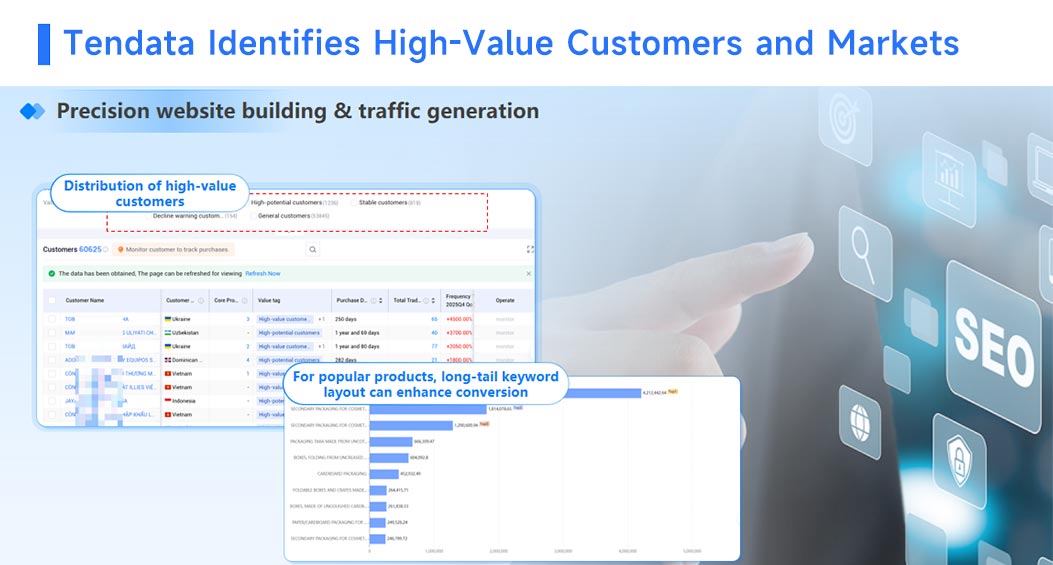
Identify High-Value Customers and Markets
Tendata uses trade data and AI-powered analysis to identify high-value customers, purchasing markets, and product opportunities. Businesses can analyze customer profiles, purchasing volume, product preferences, transaction history, and market distribution to understand where real demand is coming from. These insights help sales teams prioritize high-potential customers and focus their resources on markets with stronger purchasing opportunities.
>>> Get a Free Demo from Tendata <<<
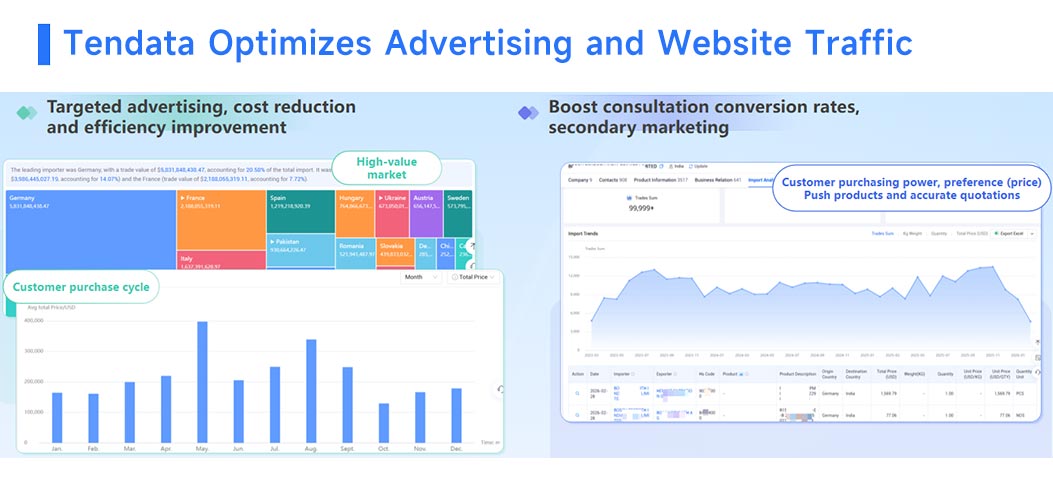
Optimize Advertising and Website Traffic
By analyzing customer purchasing cycles, target regions, industries, and product interests, Tendata helps businesses better understand where and when potential customers are most likely to purchase. These insights can support more precise SEO and SEM strategies, helping companies identify relevant products and high-conversion keywords while reducing inefficient advertising spending. For independent websites, this can turn passive traffic into more targeted visits and qualified leads.
>>> Get a Free Demo from Tendata <<<
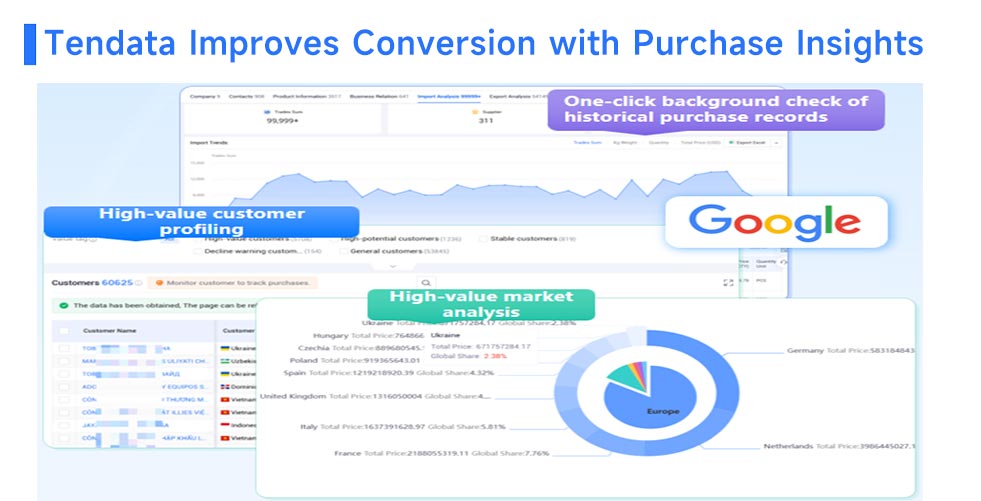
Improve Customer Conversion With Purchase Insights
Tendata enables businesses to conduct quick background checks on potential customers and review their historical purchase records, suppliers, purchasing volume, product preferences, and other trade activities. Sales teams can use these insights to understand a customer's actual purchasing power and current needs, then prepare more accurate quotations and product recommendations. By combining customer intelligence with personalized follow-up, businesses can improve communication efficiency and increase the chances of converting inquiries into actual orders.
>>> Get a Free Demo from Tendata <<<
From Worldwide Imports to More Targeted Growth
World wide imports data can provide a useful starting point for understanding global demand. Free platforms such as WITS, WTO Stats, UNCTADstat, BACI, FAOSTAT, and the Global Trade Helpdesk allow businesses to explore international trade patterns without immediately investing in a paid database.
However, market-level statistics are only one part of the process. Companies also need to identify the businesses behind the trade flows, understand their purchasing behavior, and establish effective ways to reach them.
Tendatabrings these layers together by combining global trade data, business information, customer background insights, contact resources, and AI-powered tools.
For companies looking to expand internationally, the goal is not simply to know where the world is importing. It is to understand who is buying, what they are buying, and when a real business opportunity is emerging.
Category
Leave Message for Demo Request or Questions